Shortly after returning from my trip to Ica, my 8 year old host-brother spied my newest possession: a complimentary plastic silverwear set which I acquired on the busride home. A keen interest shone in his eyes. He wanted those utensils and he didn’t hesitate to ask me for them. For some reason I thought I was going to use them, so I told him no.
A week later they still lay in the same location on my floor and he asked me when I was going to gift them to him. I relented and he quickly scooped them up, running from my room shouting with excitement. He proceeded to show every member of the family his prized possession. He set his place at the table with them in some kind of never-before-seen radial fashion. It was the first time he had ever used a fork, and really, a knife for that matter. It showed. He grabbed the fork in a fist and clumsily attempted to cut apart a chicken leg with the unserrated plastic knife, a difficult feat even for the accomplished utensil user. To eat his rice he proudly insisted on using his new tiny plastic spoon rather than the more efficient large metal spoon which lay rejected beside his plate. At the end of his meal he had me tear off a small portion of his paper napkin to wipe off his face and his hands which were clearly dirty due to his inability to correctly use his silverware.
The plastic silverware set appeared at the dinner table for the next few days until the fork tines broke off. He ate one meal with only two tines. For his birthday I bought him Colgate toothpaste, most of which he ate. Maybe for Christmas I’ll buy him a fork.
--------
I find it rather amusing how people chose to explain to others what exactly I’m doing here. Inevitably, the response has something to do with studying. The people I work with directly know a little more, but they ususally have a narrow view and think that I only do whatever activity it is that I do with them. In my free time I am certainly studying. My host-family should know best, but the other day a random woman chose to ignore the fact that I was directly in front of her and the fact that I speak Spanish to ask my host-dad what exactly I am doing here. He got this baffled look on his face before confidently responding that I am here to work with compost. Just compost.
------
A mouse ate a portion of my toothbrush bristles. I was less than thrilled. I forgot to buy a new one so I was forced to use it anyway.
------
A teacher I know introduced me to her sister. The sister looked at me and exclaimed, “You have such beautiful green eyes! Would you marry my son?” She was only half joking. This type of comment is not uncommon. Susan was told that she needs to birth children here to improve the race and whiten the babies.
-------
Loco Zapote. Second-in-command to the mayor. The worst listener I’ve ever met. Unfortunately, I have to talk to this man ALL THE TIME. I’ve always suspected that he didn’t really listen but the other day it was painfully clear. I went to the municipality to turn in a solicitud (a formal document which is used to solicit something) and, per usual, it had to do with the never-ending and never-progressing stove project. I told him why I was there, explaining that I wanted to turn in a solicitud to request the donation of a few materials. He went on a tangent about his zapote project. I reminded him why I was there. He told me that I would have to write a solicitud to request materials. I reminded him that I had just told him that I was there to turn in the solicitud which I had already written. He told me that I had no idea what I was doing, that I would have to learn how to write a solicitud. While pulling out an example of a solicitud to teach me with, I read him my solicitud. Shaking his head with disappointment, he informed me that I would need to specify exactly what I was requesting. Finally, I made him read it himself. He read it and exclaimed, “It’s all right here in your solicitud...Why didn’t you just tell me you had a solicitud?”
Sunday, May 3, 2009

Saturday, April 25, 2009
New Photos
To view pictures of my trip to Ica, follow this link:
http://picasaweb.google.es/karen.b.petersen.
http://picasaweb.google.es/karen.b.petersen.
 Huacachina Sand Dunes, Ica
 Huacachina, Ica
 Islas Ballestas, Paracas
 Monday, April 20, 2009
Happy Feet
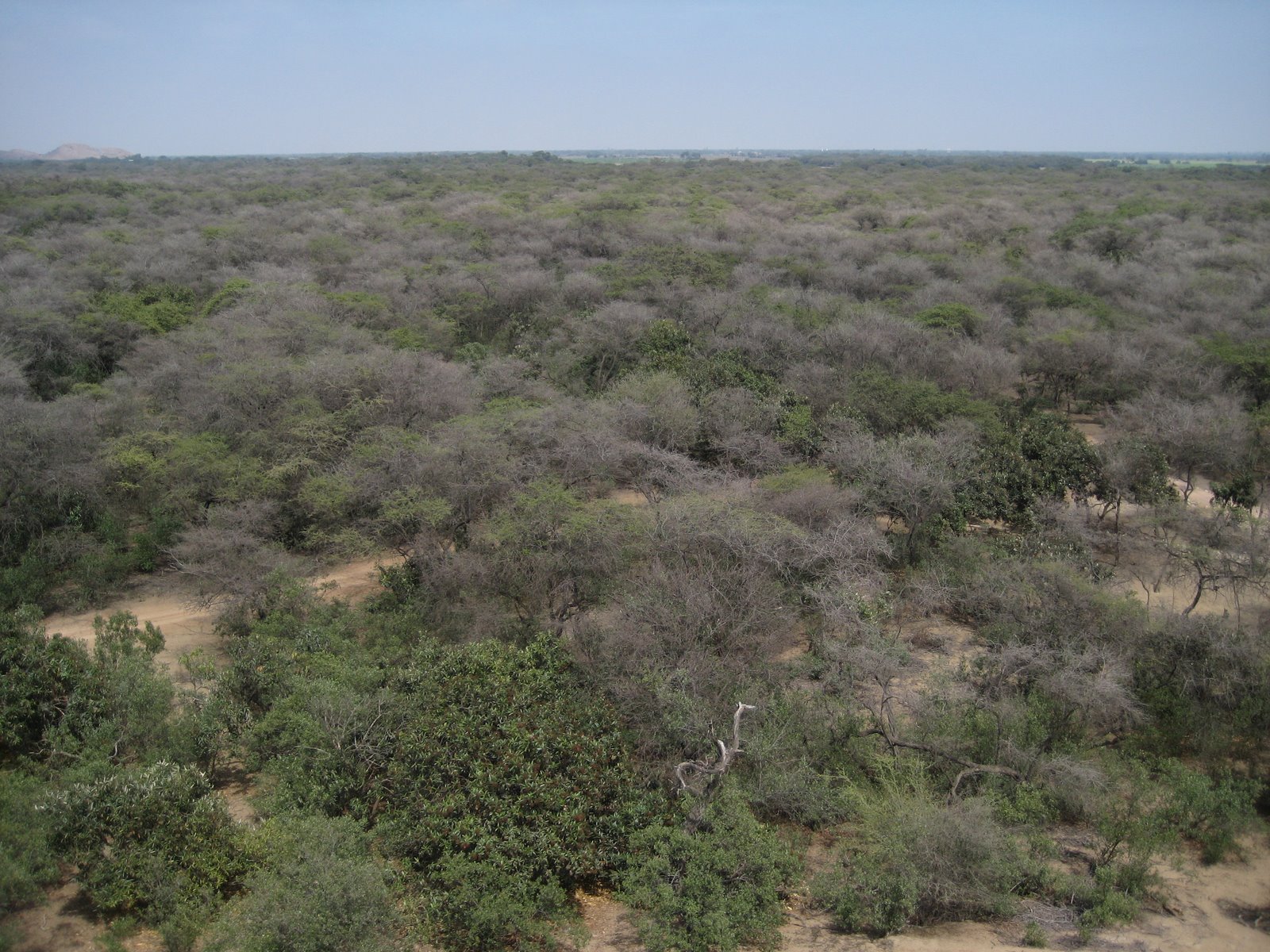
Since 80% of the Peruvian population is catholic, Holy Week is one of the largest national holidays of the year. I ended up spending Holy Week in Ica, a coastal department south of Lima, with a few other volunteers. Amazingly, Ica is actually drier than my site but has a similar appearance. Algorrobo trees also dot the landscape; however, in Ica these trees are called huarango. Ica is known for its wineries and as the hub of the small Afro-peruvian population. It was also the epicenter of the 2007 earthquake which struck shortly before I arrived in Perú.
My vacation in Ica included stops in Chincha, Ica, Huacachina, Pisco, and Paracas. Chincha turned out to be a typical Peruvian coastal town, not very noteworthy and not a tourist destination. We attempted to visit an old hacienda there but after a S/.30 taxi ride we discovered it was still closed due to the earthquake.
In Ica we stayed at Huacachina, an odd but pretty oasis in the midst of sand dunes. It’s overrun by tourists but worth a visit nonetheless. Once a ritzy resort for wealthy Limeños, Huacachina is now popular for its dunebuggy rides and sandboarding. While this activity sounds innocent enough it’s really somewhat dangerous. I should have known better as soon as we boarded the dunebuggy with our driver, a Jean Claude Van Damme type who didn’t bother to acknowledge our existence, filled the gas tank while lighting a cigarette, nearly ran into someone before leaving the parking lot, and didn’t wear his seatbelt. Regardless, the dunebuggy portion of our trip turned out to be the safest part. The sandboarding, which is like snowboarding but on sand, was not. Proof in point, I nearly made it down the final hill standing up but terminated my run spiraling around and slamming my head into the ground, hurting my neck in the process. Jean Claude did not ask me how I was but rather commented that everyone breaks their clavicle that way. I’m still not sure how I would have broken my clavicle but who am I to say. Later that night I saw him drinking at our hostal. He mumbled some gibberish to me which must have meant, “How’s your neck?” and then hit me on the back of my neck. Literally, he hit me.
While in Ica we also visited a couple of wineries and an excellent chocolate factory (Helena’s.) Rather than opting for the hostal’s package tour we did this on our own which cost less than half as much. We spent the savings on chocolate.
The final stop of our trip was Pisco where we stayed in the room of a fellow volunteer, Aaron, who has the good fortune to step out his front door to a beautiful ocean view. Pisco was hit hard by the 2007 earthquake and, approaching two years later, the effects can still be seen. On the outskirts of the town the shantytowns are much larger than I expected. Adobe houses which were left standing are mixed with a smattering of temporary housing.
From Pisco we visited the Islas Ballestas on a boat tour. The islands are part of Paracas National Park, a coastal desert ecosystem preserved for the large amount of coastal wildlife it protects. Called the “Poor Man’s Galapagos” in Lonely Planet, the islands don’t really compare to the Galapagos but are home to an incredible number of birds including penguins. A secluded nesting beach overflowing with hundreds, maybe thousands, of sea lions and their cubs, reminded me of a scene typical of National Geographic.
-------
I wear a seatbelt so infrequently in Perú that I don’t think twice about riding in a vehicle without one. More than once I have had a seatbelt available to me which I didn’t even wear because encountering one here is such a rarity that I no longer bother to check. Moto-taxis clearly don’t have seatbelts but I’ve always just assumed that they were a safe form of transport. On the moto-taxi back to my site after vacation I was feeling particularly safe, especially in comparison to my recent dunebuggy ride. Then, rounding a curve near my community, the moto-taxi I was on collided with an oncoming moto-taxi propelling the driver of my moto-taxi through the air. The moto-taxi almost landed on top of me but, luckily, we were going slowly and I only bruised my arm. The driver of the other moto-taxi started yelling at the poor kid who went flying through the air before he was even standing. Seriously though, the accident was absurd. Both of them were driving on the wrong side of the road. My moto-taxi driver decided to move to the correct side while the other driver decided to do nothing. As we were approaching the other moto-taxi I recall thinking that surely one of them was going to stop or move out of the way. Instead they just ran right into each other. Just kept going straight ahead as if there were no other option. To top it off, they decided to settle the matter somewhere else and drove off without a word, leaving me and the other passenger, an old farmer, standing on the side of the road to wait for another moto-taxi.
-------
Happy Feet was on television last Sunday. My little brother could hardly contain his excitment. Halfway through the movie he turned to me and declared matter-of-factly that all those penguins weren’t actually real but rather they were humans dressed up in penguin costumes. He sounded so proud that he had figured out the trick that I felt bad informing him that it was actually a cartoon.
During the movie my host-mom also told me that for two years while she lived in Lima, she had a pet penguin which they had discovered one day in the Río Rimac, the major river which runs through the city. His name was Juan. Just to clarify, penguins are NOT natural inhabitants of Lima.
My vacation in Ica included stops in Chincha, Ica, Huacachina, Pisco, and Paracas. Chincha turned out to be a typical Peruvian coastal town, not very noteworthy and not a tourist destination. We attempted to visit an old hacienda there but after a S/.30 taxi ride we discovered it was still closed due to the earthquake.
In Ica we stayed at Huacachina, an odd but pretty oasis in the midst of sand dunes. It’s overrun by tourists but worth a visit nonetheless. Once a ritzy resort for wealthy Limeños, Huacachina is now popular for its dunebuggy rides and sandboarding. While this activity sounds innocent enough it’s really somewhat dangerous. I should have known better as soon as we boarded the dunebuggy with our driver, a Jean Claude Van Damme type who didn’t bother to acknowledge our existence, filled the gas tank while lighting a cigarette, nearly ran into someone before leaving the parking lot, and didn’t wear his seatbelt. Regardless, the dunebuggy portion of our trip turned out to be the safest part. The sandboarding, which is like snowboarding but on sand, was not. Proof in point, I nearly made it down the final hill standing up but terminated my run spiraling around and slamming my head into the ground, hurting my neck in the process. Jean Claude did not ask me how I was but rather commented that everyone breaks their clavicle that way. I’m still not sure how I would have broken my clavicle but who am I to say. Later that night I saw him drinking at our hostal. He mumbled some gibberish to me which must have meant, “How’s your neck?” and then hit me on the back of my neck. Literally, he hit me.
While in Ica we also visited a couple of wineries and an excellent chocolate factory (Helena’s.) Rather than opting for the hostal’s package tour we did this on our own which cost less than half as much. We spent the savings on chocolate.
The final stop of our trip was Pisco where we stayed in the room of a fellow volunteer, Aaron, who has the good fortune to step out his front door to a beautiful ocean view. Pisco was hit hard by the 2007 earthquake and, approaching two years later, the effects can still be seen. On the outskirts of the town the shantytowns are much larger than I expected. Adobe houses which were left standing are mixed with a smattering of temporary housing.
From Pisco we visited the Islas Ballestas on a boat tour. The islands are part of Paracas National Park, a coastal desert ecosystem preserved for the large amount of coastal wildlife it protects. Called the “Poor Man’s Galapagos” in Lonely Planet, the islands don’t really compare to the Galapagos but are home to an incredible number of birds including penguins. A secluded nesting beach overflowing with hundreds, maybe thousands, of sea lions and their cubs, reminded me of a scene typical of National Geographic.
-------
I wear a seatbelt so infrequently in Perú that I don’t think twice about riding in a vehicle without one. More than once I have had a seatbelt available to me which I didn’t even wear because encountering one here is such a rarity that I no longer bother to check. Moto-taxis clearly don’t have seatbelts but I’ve always just assumed that they were a safe form of transport. On the moto-taxi back to my site after vacation I was feeling particularly safe, especially in comparison to my recent dunebuggy ride. Then, rounding a curve near my community, the moto-taxi I was on collided with an oncoming moto-taxi propelling the driver of my moto-taxi through the air. The moto-taxi almost landed on top of me but, luckily, we were going slowly and I only bruised my arm. The driver of the other moto-taxi started yelling at the poor kid who went flying through the air before he was even standing. Seriously though, the accident was absurd. Both of them were driving on the wrong side of the road. My moto-taxi driver decided to move to the correct side while the other driver decided to do nothing. As we were approaching the other moto-taxi I recall thinking that surely one of them was going to stop or move out of the way. Instead they just ran right into each other. Just kept going straight ahead as if there were no other option. To top it off, they decided to settle the matter somewhere else and drove off without a word, leaving me and the other passenger, an old farmer, standing on the side of the road to wait for another moto-taxi.
-------
Happy Feet was on television last Sunday. My little brother could hardly contain his excitment. Halfway through the movie he turned to me and declared matter-of-factly that all those penguins weren’t actually real but rather they were humans dressed up in penguin costumes. He sounded so proud that he had figured out the trick that I felt bad informing him that it was actually a cartoon.
During the movie my host-mom also told me that for two years while she lived in Lima, she had a pet penguin which they had discovered one day in the Río Rimac, the major river which runs through the city. His name was Juan. Just to clarify, penguins are NOT natural inhabitants of Lima.
Issues
In the past month I have started at least five different blogs on random topics and I haven’t finished a single one. Rather than continue on this path of complete unproductiveness I realized that I could probably write one blog and convey the same thing. It’s surely for the better because I can’t imagine many readers would have survived five such blogs.
Education:
In Perú, the education system is abysmal. Really horrible. My 15 year old brother didn’t know what an island was. He couldn’t even locate Perú on the map. Believe it or not, he is actually intelligent; however, he has been subjected to one of the worst education systems in the Western hemisphere, second worst only to Haiti. Not only is the teaching method antiquated and devoid of creativity but the schools lack resources and teachers. Futhermore, of those teachers that are teaching, the rare few are outstanding. It is not unheard of for teachers to arrive at school drunk or just not arrive. It is also common for students to pay teachers to pass them.
Asistencialismo:
Asistencialismo is a word that doesn’t even exist in English, at least I can’t find it in my Spanish-English dictionary. Asistencialismo is a dependence on government handouts, welfare, and outside assistance. In Perú this phenomenon has been inculcated by its own government. During the rule of Fujimori, or “El Chino” as Peruvians call him, a huge number of social welfare programs were created. People became accustomed to free government handouts and now they expect them. Despite Fujimori’s highly questionable human rights record, many Peruvians love him. El Chino gave them free tin rooves and abundant food to cook in the local comedores populares, soup kitchens. What happens when the government has no more to give? Well, what has happened on the rural Peruvian coast is that people got so used to government assistance that they now take little responsibility for getting things done themselves. If they don’t get something free, such as a kilo of rice, they don’t participate.
Corruption:
The Peruvian government is corrupt. Peruvian police are corrupt. Even the teachers are corrupt. Money moves under the table and everyone knows it. Not everyone participates directly in the corruption, but it is an accepted part of life. For example, the mayor of Pacora spent S/.6.000 ($2,000) on his birthday party using local funds which must have involved some shady maneuvers. No one did anything. Nothing. Now the municipality claims to have no money. Until someone does something nothing will change. To quote a Calle 13 song, “Aprendí que mi pueblo todavía reza porque las fucking autoridades y la puta realeza todavía se mueven por debajo de la mesa.” (I learned that my town still prays because the fucking authorities and the bitch royalty still deals under the table.)
La hora peruana:
I’ve mentioned la hora peruana before. It is basically the widely accepted idea that Peruvians operate on their own time, which is an hour behind real time. For example, when scheduling a meeting, you will be told to schedule it at 3:00 so that people will get there by 3:30 but they will actually arrive at 4:00. While most people from the States literally could not handle this lackadaisical concept of time, la hora peruana is not the end of the world. If everyone knows and accepts that things will actually happen an hour after they are supposed to, well, I guess that is okay. However, if you actually want to get something done, la hora peruana can be exasperating. In the last year, every single meeting I have ever had has made me feel awkward because I feel badly for the few people who arrive on time but have to wait up to an hour for the meeting to start. I never know when to start the meeting, asking every five minutes if we should start yet, always told patiently that there is no rush. Inevitably the meetings always end up being less productive than they should be because people continue to arrive after they have already started and those people who arrived on time lose interest. Interestingly enough, la hora peruana bothers me more now than it did initially. I’ve arrived at the conclusion that punctuality is actually important when attempting to get things done. And, clearly, there is no shortage of things to be done.
Education:
In Perú, the education system is abysmal. Really horrible. My 15 year old brother didn’t know what an island was. He couldn’t even locate Perú on the map. Believe it or not, he is actually intelligent; however, he has been subjected to one of the worst education systems in the Western hemisphere, second worst only to Haiti. Not only is the teaching method antiquated and devoid of creativity but the schools lack resources and teachers. Futhermore, of those teachers that are teaching, the rare few are outstanding. It is not unheard of for teachers to arrive at school drunk or just not arrive. It is also common for students to pay teachers to pass them.
Asistencialismo:
Asistencialismo is a word that doesn’t even exist in English, at least I can’t find it in my Spanish-English dictionary. Asistencialismo is a dependence on government handouts, welfare, and outside assistance. In Perú this phenomenon has been inculcated by its own government. During the rule of Fujimori, or “El Chino” as Peruvians call him, a huge number of social welfare programs were created. People became accustomed to free government handouts and now they expect them. Despite Fujimori’s highly questionable human rights record, many Peruvians love him. El Chino gave them free tin rooves and abundant food to cook in the local comedores populares, soup kitchens. What happens when the government has no more to give? Well, what has happened on the rural Peruvian coast is that people got so used to government assistance that they now take little responsibility for getting things done themselves. If they don’t get something free, such as a kilo of rice, they don’t participate.
Corruption:
The Peruvian government is corrupt. Peruvian police are corrupt. Even the teachers are corrupt. Money moves under the table and everyone knows it. Not everyone participates directly in the corruption, but it is an accepted part of life. For example, the mayor of Pacora spent S/.6.000 ($2,000) on his birthday party using local funds which must have involved some shady maneuvers. No one did anything. Nothing. Now the municipality claims to have no money. Until someone does something nothing will change. To quote a Calle 13 song, “Aprendí que mi pueblo todavía reza porque las fucking autoridades y la puta realeza todavía se mueven por debajo de la mesa.” (I learned that my town still prays because the fucking authorities and the bitch royalty still deals under the table.)
La hora peruana:
I’ve mentioned la hora peruana before. It is basically the widely accepted idea that Peruvians operate on their own time, which is an hour behind real time. For example, when scheduling a meeting, you will be told to schedule it at 3:00 so that people will get there by 3:30 but they will actually arrive at 4:00. While most people from the States literally could not handle this lackadaisical concept of time, la hora peruana is not the end of the world. If everyone knows and accepts that things will actually happen an hour after they are supposed to, well, I guess that is okay. However, if you actually want to get something done, la hora peruana can be exasperating. In the last year, every single meeting I have ever had has made me feel awkward because I feel badly for the few people who arrive on time but have to wait up to an hour for the meeting to start. I never know when to start the meeting, asking every five minutes if we should start yet, always told patiently that there is no rush. Inevitably the meetings always end up being less productive than they should be because people continue to arrive after they have already started and those people who arrived on time lose interest. Interestingly enough, la hora peruana bothers me more now than it did initially. I’ve arrived at the conclusion that punctuality is actually important when attempting to get things done. And, clearly, there is no shortage of things to be done.
Sunday, March 22, 2009
Photos
I finally got around to posting pictures.
To view, follow the link below...
http://picasaweb.google.es/karen.b.petersen.
http://picasaweb.google.es/karen.b.petersen.

ECO chocolotada.

Huaca Rivera grade school promotion.
 My sister, Kelly, at Colca Canyon, Arequipa.
Saturday, March 14, 2009
Chew Your Food Completely
Noodles can look like worms to the untrained eye. So can onions and bean sprouts. Months ago I thought I encountered a parasite in my stool only to discover that it was actually an onion. This past weekend I was so convinced that I had discovered a worm floating in the toilet bowl that I actually removed it and showed it to my friends Val and Susan. In fact, I was so convinced that I took the worm all the way to the hospital in my pocket to have it examined in the laboratory. The man in the lab was extremely professional but his first question was, “Have you eaten chifa (chinese food) recently? Of course I had eaten chifa the day before. Regardless, he examined my “worm” under the microscope and confirmed that the worm was indeed a noodle. Yes, a noodle.
-------
I’ve recently spotted some more catchy T-shirt phrases.
Greenish Kansas Kids
WOW! You have nine babies! Chick
-------
Since January, Susan and I have been working on a solid waste management diagnostic of Pacora. Amazingly, the endeavour is actually going well. Honestly, I’m amazed it’s even going. We have formed a committee which is formally named the “Comité de Apoyo al Manejo Sostenible de Residuos Sólidos del Distrito de Pacora.” The name is a bit cumbersome in my opinion but typical of Peruvian titles. I’m just surprised it hasn’t yet been given an equally absurd acronym, another common Peruvian practice. For example, COAPMASOREDIPA would be a viable option.
The committee, consisting of 5 local representatives, includes the director of the health post, the president of the women’s association, the president of the beekeeper’s association, a high school teacher, and a city council member. A couple of our meetings have been canceled and the majority still does not arrive on time, but I think we are making strides. Besides the committee, numerous local citizens have been attending and support seems to be growing.
As part of the waste diagnostic we organized a group of people to do household surveys. We divided Pacora into zones and assigned a couple of people to each zone. Susan prepared very clear maps so that they could easily orient themselves and figure out exactly which houses they were to survey. Now, I should not make sweeping generalizations but, from our experience it appears that Peruvians from Pacora can not read maps. Pacora is not even that big – it has something like 10 streets – but we had to explain the maps to every single person. For example, one seemingly capable committee member appeared to understand his map, but as Susan was doing her surveys she began to encounter random houses in other zones that he had surveyed. Once we found him wandering through the plaza heading away from his zone on his way to conduct more surveys.
Susan and I also took on our part of the surveys. I forgot how entertaining these can be. In one house I was sat down in a tiny pink children’s chair while the person I was surveying sat across the table from me in a normal sized chair. Other chairs were available. Another woman gave me a huge guava which made surveying the remaining houses awkward. Really, has anyone ever arrived at your house to do a survey with a riduculously large green pod sticking out of her purse? Probably not. At one house I surveyed the woman outside who was selling slushies and cebada, a common local drink made from barley and flavored with sugar and lemon. Several men were sitting around and they all insisted on answering every question that I asked her. One of them invited me to a cebada which I actually like in normal quantities. Unfortunately, this cebada came in pitcher size. The first half was fine, but I actually thought I was going to vomit as I attempted to drink the rest. Concentrating on the questions at hand became difficult because I could only envision how I would explain hurling my cebada all over the place. One teenage boy who had recently returned from Lima could not understand me and I had to repeat EVERY single question. An ancient woman with crazy hair could not see me but still let me into her house. I was moving along at a decent rate before I got to her house. By the time I left I was even privy to the type of canned milk that she uses. I don’t really think she got the point of the survey either. When asked where she disposes of her trash she told me that she sometimes throws her trash over her wall into the neighbors house to get even with them.
On Wednesday we collected the surveys and now we have to compile the data. Next comes a study of waste generation and separation...
-------
The female volunteer park guards who have been working with me on a tree nursery have reverted to sweeping the forest. I went to the nursery on Tuesday to work and no one was there. It is what it is. I'm not surprised. However, what bothers me is that they are following the instructions of a local "environmental" NGO that is currently doing a project in the buffer zone which requires that the women are sweeping in order to recieve monthly food handouts. Now, I approached one of the NGO workers, a girl my age and supposedly a biology graduate, and told her my thoughts. My thoughts being that sweeping the forest is not only illogical but also hinders soil recuperation. Apparently she didn't comprehend. Furthermore, it really bothers me that the women do not take a proactive role but rather blindly follow the orders of whichever authority figure commands them. It is easy to assume that the women are genuinely interested in conserving the forest because they are volunteer park guards. Not so. They really have never bothered to understand the importance of conserving it. This may be due to a lack of access to education and custom but, partially, it is just apathy.
-------
I’ve recently spotted some more catchy T-shirt phrases.
Greenish Kansas Kids
WOW! You have nine babies! Chick
-------
Since January, Susan and I have been working on a solid waste management diagnostic of Pacora. Amazingly, the endeavour is actually going well. Honestly, I’m amazed it’s even going. We have formed a committee which is formally named the “Comité de Apoyo al Manejo Sostenible de Residuos Sólidos del Distrito de Pacora.” The name is a bit cumbersome in my opinion but typical of Peruvian titles. I’m just surprised it hasn’t yet been given an equally absurd acronym, another common Peruvian practice. For example, COAPMASOREDIPA would be a viable option.
The committee, consisting of 5 local representatives, includes the director of the health post, the president of the women’s association, the president of the beekeeper’s association, a high school teacher, and a city council member. A couple of our meetings have been canceled and the majority still does not arrive on time, but I think we are making strides. Besides the committee, numerous local citizens have been attending and support seems to be growing.
As part of the waste diagnostic we organized a group of people to do household surveys. We divided Pacora into zones and assigned a couple of people to each zone. Susan prepared very clear maps so that they could easily orient themselves and figure out exactly which houses they were to survey. Now, I should not make sweeping generalizations but, from our experience it appears that Peruvians from Pacora can not read maps. Pacora is not even that big – it has something like 10 streets – but we had to explain the maps to every single person. For example, one seemingly capable committee member appeared to understand his map, but as Susan was doing her surveys she began to encounter random houses in other zones that he had surveyed. Once we found him wandering through the plaza heading away from his zone on his way to conduct more surveys.
Susan and I also took on our part of the surveys. I forgot how entertaining these can be. In one house I was sat down in a tiny pink children’s chair while the person I was surveying sat across the table from me in a normal sized chair. Other chairs were available. Another woman gave me a huge guava which made surveying the remaining houses awkward. Really, has anyone ever arrived at your house to do a survey with a riduculously large green pod sticking out of her purse? Probably not. At one house I surveyed the woman outside who was selling slushies and cebada, a common local drink made from barley and flavored with sugar and lemon. Several men were sitting around and they all insisted on answering every question that I asked her. One of them invited me to a cebada which I actually like in normal quantities. Unfortunately, this cebada came in pitcher size. The first half was fine, but I actually thought I was going to vomit as I attempted to drink the rest. Concentrating on the questions at hand became difficult because I could only envision how I would explain hurling my cebada all over the place. One teenage boy who had recently returned from Lima could not understand me and I had to repeat EVERY single question. An ancient woman with crazy hair could not see me but still let me into her house. I was moving along at a decent rate before I got to her house. By the time I left I was even privy to the type of canned milk that she uses. I don’t really think she got the point of the survey either. When asked where she disposes of her trash she told me that she sometimes throws her trash over her wall into the neighbors house to get even with them.
On Wednesday we collected the surveys and now we have to compile the data. Next comes a study of waste generation and separation...
-------
The female volunteer park guards who have been working with me on a tree nursery have reverted to sweeping the forest. I went to the nursery on Tuesday to work and no one was there. It is what it is. I'm not surprised. However, what bothers me is that they are following the instructions of a local "environmental" NGO that is currently doing a project in the buffer zone which requires that the women are sweeping in order to recieve monthly food handouts. Now, I approached one of the NGO workers, a girl my age and supposedly a biology graduate, and told her my thoughts. My thoughts being that sweeping the forest is not only illogical but also hinders soil recuperation. Apparently she didn't comprehend. Furthermore, it really bothers me that the women do not take a proactive role but rather blindly follow the orders of whichever authority figure commands them. It is easy to assume that the women are genuinely interested in conserving the forest because they are volunteer park guards. Not so. They really have never bothered to understand the importance of conserving it. This may be due to a lack of access to education and custom but, partially, it is just apathy.
Saturday, March 7, 2009
¡Ay, Caray! Los perros no me dejan…
I have a history with dogs. Twice when I was younger I was bit by dogs; once it was a fairly serious attack. I actually love dogs, probably more than normal given the circumstances. Nonetheless, I still have a residual fear of them which I thought I had conquered in Perú out of neccessity because psychotic dogs abound here. My friend Sam Goodman, aka “Buenhombre,” has been bit 5 or 6 times here, so many times he’s lost count. Sam is basically oblivious to life which might have something to do with it, but he had never been attacked before coming to Perú.
Lately, one dog in particular has been inhibiting my ability to go to the bathroom. It started one night when it was raining. During the early evening I went to use the latrine and I encountered a new dog which looked like a pit bull. I approached with caution, it sniffed me and wagged its tail. However, at two in the morning I had to go to the bathroom again. There was no sign of the dog but, as I emerged from the letrine, it was rounding the corner of the house, trotting in my direction. The dog sniffed me again and then started playing which is normal, except that it quickly got out of hand. The dog was riled up and it started jumping around and mouthing me. Luckily I grabbed a nearby shovel and it ran away. I was certain that it would have otherwise attacked me.
For several nights I did not go to the bathroom after dark which led to some very uncomfortable mornings. Finally I got up the courage to visit the letrine once again to find a donkey blocking my path. I shooed it out of the way, which startled it. It sprinted towards the latrine, in the process disturbing the menagerie of animals which lay sleeping on top of a nearby pile of corn stalks. Calves, chickens, at least five dogs, including the pit bull, and a disconcertingly large pig all rained down from the pile of corn stalks shrieking and generally causing an uproar. In the pandemonium, I became convinced that the pit bull would attack me and sprinted towards the house. I must have looked absurd.
A couple nights ago I was going to the bathroom before I went to bed and the pit bull was once again outside. I went back into the house and my little brother who is seven years old was still watching television. I asked him to accompany me to the letrine because the dog was outside. Of course, I let him go first and when he saw the dog he simply yelled at it and told it to go home... “¡Caramba!Vaya a la casa. ¿Qué haces por acá? Vete.” The dog ran off with its tail between its legs. My brother stood guard outside the letrine but the dog was no where to be found. Last night my brother ran the dog off again. My brother is seriously not even half my size. I think that maybe tonight I can go it alone.
Lately, one dog in particular has been inhibiting my ability to go to the bathroom. It started one night when it was raining. During the early evening I went to use the latrine and I encountered a new dog which looked like a pit bull. I approached with caution, it sniffed me and wagged its tail. However, at two in the morning I had to go to the bathroom again. There was no sign of the dog but, as I emerged from the letrine, it was rounding the corner of the house, trotting in my direction. The dog sniffed me again and then started playing which is normal, except that it quickly got out of hand. The dog was riled up and it started jumping around and mouthing me. Luckily I grabbed a nearby shovel and it ran away. I was certain that it would have otherwise attacked me.
For several nights I did not go to the bathroom after dark which led to some very uncomfortable mornings. Finally I got up the courage to visit the letrine once again to find a donkey blocking my path. I shooed it out of the way, which startled it. It sprinted towards the latrine, in the process disturbing the menagerie of animals which lay sleeping on top of a nearby pile of corn stalks. Calves, chickens, at least five dogs, including the pit bull, and a disconcertingly large pig all rained down from the pile of corn stalks shrieking and generally causing an uproar. In the pandemonium, I became convinced that the pit bull would attack me and sprinted towards the house. I must have looked absurd.
A couple nights ago I was going to the bathroom before I went to bed and the pit bull was once again outside. I went back into the house and my little brother who is seven years old was still watching television. I asked him to accompany me to the letrine because the dog was outside. Of course, I let him go first and when he saw the dog he simply yelled at it and told it to go home... “¡Caramba!Vaya a la casa. ¿Qué haces por acá? Vete.” The dog ran off with its tail between its legs. My brother stood guard outside the letrine but the dog was no where to be found. Last night my brother ran the dog off again. My brother is seriously not even half my size. I think that maybe tonight I can go it alone.
Subscribe to:
Posts (Atom)