Monday, June 22, 2009

Sunday, June 21, 2009

Travel Nuisances: Strikes and ATM Booths

When my sister and I recently met my parents in Lima they were wearing matching outfits. Both of them were sporting the typical tourist uniform: khaki, neutrals, quick dry, and outdoorsy. I had a great time making fun of them until it was pointed out that I fit right in. Matching we were.

My sister came to my site after finishing her semester abroad in Ecuador. She spent $30 and roughly 20 hours on sketchy buses to get to my site. With the help of a 7th day Adventist named Ralph she managed to cross the border. For the good part of one week she stayed with me in my site before we headed to Lima to meet our parents.

As this was my family’s second trip to Peru, we opted to visit the famous Gringo Trail. Starting off in Cuzco, we visited colonial churches, Incan ruins (Sacsaywaman, Pisac, Ollantaytambo), the Sacred Valley, Aguas Calientes and Machu Picchu. Our visit was more stressful than I would have hoped, especially given that I had planned it all out in advance. The farmers of the region went on strike the very day we were supposed to go to Aguas Calientes, blocking the roads and preventing our train from running. We ended up going the next day but it was a hassle trying to reschedule everything. The very day we went to Machu Picchu, my sister and my mom fell ill. My sister was down for the count for a number of days. I have numerous pictures of her sprawled out at the various Incan ruins we visited. Basically I took pictures of ruins and I took pictures of my sister sleeping on ruins.

In Cusco one afternoon my Dad decided to withdraw money from an ATM machine located on a busy corner of the central plaza. A couple of moments later I turned around to see my Dad pacing back and forth in the booth looking trapped. A look of furor flashed across his face. He couldn’t figure out how to get out. The booth was primarily constructed of glass walls, making his plight all the more obvious. On the outside of the booth I noticed that it had one of those things which requires you to swipe your card through to enter. I figured that we would have to wait for someone to come along who was a member of the bank to swipe his/her card and open the door. Turns out there was a button right by the handle ...

From Cusco we took a bus to Puno. Stunned by the price of the tourist bus, I opted for the more economical, local bus. Later my parents gently hinted that I could spend more the next time. Regardless, the ride was gorgeous. Puno is not gorgeous but it makes no false claims. Puno is cold, so cold that I actually used a down jacket.

In Puno we took a tour which visited Lake Titicaca, the Islas Flotantes (floating islands), Isla Amantaní, and Isla Taquile. The Islas Flotantes are tiny man-made reed islands where members of the Uros culture live. Only a few families live on each island. Our guide said that the Uros people have always lived in the lake, suggesting that they have never lived on land, but I’m fairly certain that there had to be a decently strong motive for them to just up and start making their own islands. You don’t just randomly do that. We spent the night on Isla Amantaní in the house of a local family. Amantaní is isolated to a certain extent from the mainland so visiting it feels somewhat surreal especially at night. I’m not sure I’ve ever seen stars quite as brilliant as I saw that night on Amantaní. While there, we ate a ridiculous number of potatoes or I did at least. Not even my Dad managed to put a dent in his. We also drank delicious muña tea.

The last stop of the vacation was Arequipa, the second largest city in Perú. Kelly and I only stayed for two days before heading on to Lima for Kelly’s flight back to the States. My parents stayed behind, albeit apprehensively, to visit Colca Canyon. On the taxi ride to the airport our taxi was stopped twice, once by a frantic French woman from the consulate and once by a police woman, to write down the driver’s info. Apparently, there had been an assault on two young tourists the night before. Flustered, the taxi driver spent the entire ride explaining what we should do every time we take a taxi: Call someone to let them know where you are going and discreetly detail the driver—his name, taxi number, characteristics—making it seem like you are just having a normal conversation. Make sure to include observations about his mental state. For good measure he added that it was not recommended to get in a taxi with a driver that looks sketchy. Is the driver wearing dark sunglasses and a hat? A ski mask? Don’t take his taxi.

Wednesday, June 10, 2009

Current Events

Here is a link to a news article about an ongoing indigenous strike happening currently in Perú.

Peru's Deadly Battle Over Oil in the Amazon

Indigenous Peruvians vow more attacks over control of the Amazon

Sunday, May 3, 2009

Plastic Utensils

Shortly after returning from my trip to Ica, my 8 year old host-brother spied my newest possession: a complimentary plastic silverwear set which I acquired on the busride home. A keen interest shone in his eyes. He wanted those utensils and he didn’t hesitate to ask me for them. For some reason I thought I was going to use them, so I told him no.

A week later they still lay in the same location on my floor and he asked me when I was going to gift them to him. I relented and he quickly scooped them up, running from my room shouting with excitement. He proceeded to show every member of the family his prized possession. He set his place at the table with them in some kind of never-before-seen radial fashion. It was the first time he had ever used a fork, and really, a knife for that matter. It showed. He grabbed the fork in a fist and clumsily attempted to cut apart a chicken leg with the unserrated plastic knife, a difficult feat even for the accomplished utensil user. To eat his rice he proudly insisted on using his new tiny plastic spoon rather than the more efficient large metal spoon which lay rejected beside his plate. At the end of his meal he had me tear off a small portion of his paper napkin to wipe off his face and his hands which were clearly dirty due to his inability to correctly use his silverware.

The plastic silverware set appeared at the dinner table for the next few days until the fork tines broke off. He ate one meal with only two tines. For his birthday I bought him Colgate toothpaste, most of which he ate. Maybe for Christmas I’ll buy him a fork.

--------

I find it rather amusing how people chose to explain to others what exactly I’m doing here. Inevitably, the response has something to do with studying. The people I work with directly know a little more, but they ususally have a narrow view and think that I only do whatever activity it is that I do with them. In my free time I am certainly studying. My host-family should know best, but the other day a random woman chose to ignore the fact that I was directly in front of her and the fact that I speak Spanish to ask my host-dad what exactly I am doing here. He got this baffled look on his face before confidently responding that I am here to work with compost. Just compost.
------

A mouse ate a portion of my toothbrush bristles. I was less than thrilled. I forgot to buy a new one so I was forced to use it anyway.

------

A teacher I know introduced me to her sister. The sister looked at me and exclaimed, “You have such beautiful green eyes! Would you marry my son?” She was only half joking. This type of comment is not uncommon. Susan was told that she needs to birth children here to improve the race and whiten the babies.

-------

Loco Zapote. Second-in-command to the mayor. The worst listener I’ve ever met. Unfortunately, I have to talk to this man ALL THE TIME. I’ve always suspected that he didn’t really listen but the other day it was painfully clear. I went to the municipality to turn in a solicitud (a formal document which is used to solicit something) and, per usual, it had to do with the never-ending and never-progressing stove project. I told him why I was there, explaining that I wanted to turn in a solicitud to request the donation of a few materials. He went on a tangent about his zapote project. I reminded him why I was there. He told me that I would have to write a solicitud to request materials. I reminded him that I had just told him that I was there to turn in the solicitud which I had already written. He told me that I had no idea what I was doing, that I would have to learn how to write a solicitud. While pulling out an example of a solicitud to teach me with, I read him my solicitud. Shaking his head with disappointment, he informed me that I would need to specify exactly what I was requesting. Finally, I made him read it himself. He read it and exclaimed, “It’s all right here in your solicitud...Why didn’t you just tell me you had a solicitud?”

Saturday, April 25, 2009

New Photos

To view pictures of my trip to Ica, follow this link:
http://picasaweb.google.es/karen.b.petersen.
Huacachina Sand Dunes, Ica

Huacachina, Ica

Islas Ballestas, Paracas

Monday, April 20, 2009

Happy Feet

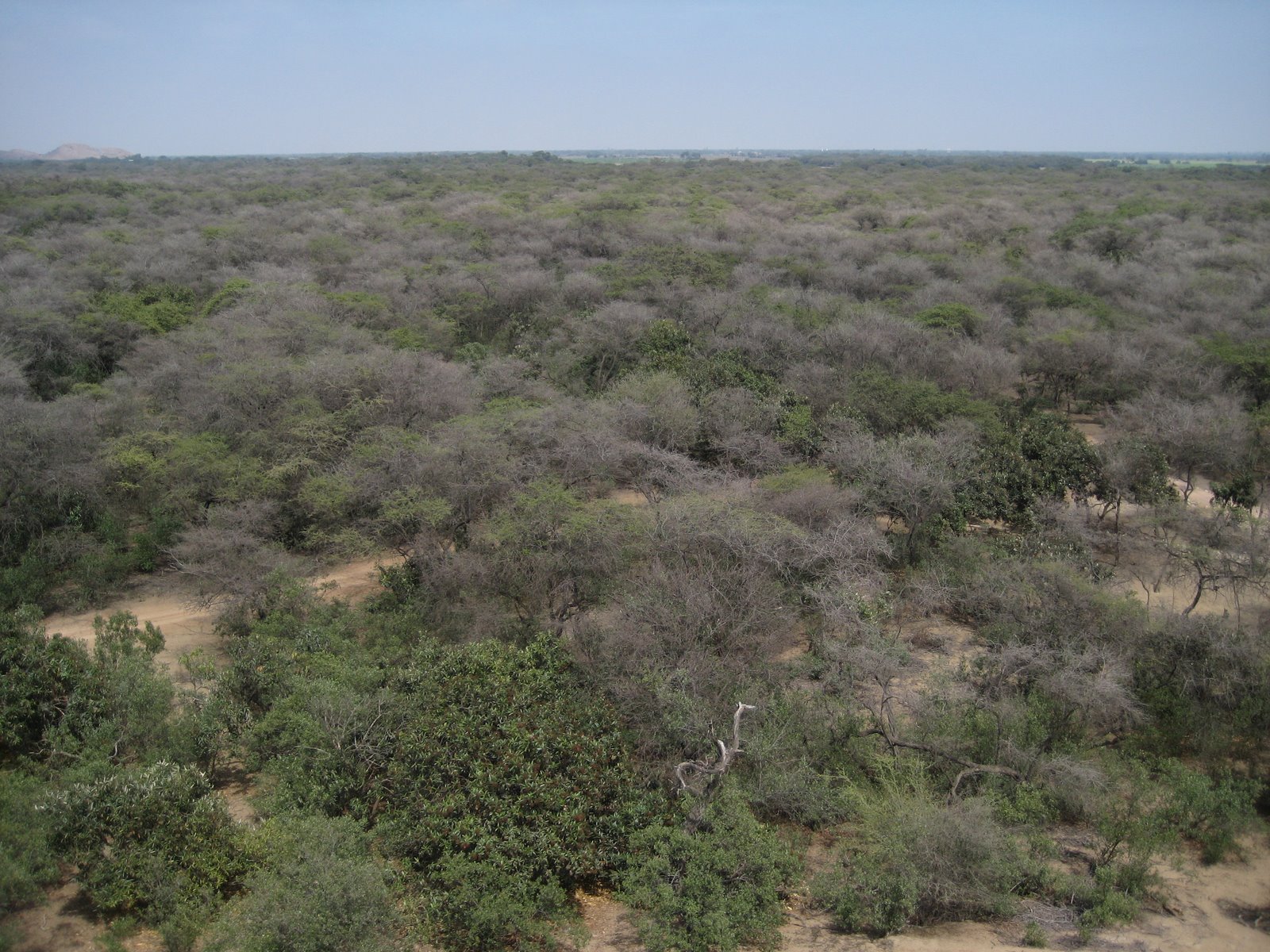
Since 80% of the Peruvian population is catholic, Holy Week is one of the largest national holidays of the year. I ended up spending Holy Week in Ica, a coastal department south of Lima, with a few other volunteers. Amazingly, Ica is actually drier than my site but has a similar appearance. Algorrobo trees also dot the landscape; however, in Ica these trees are called huarango. Ica is known for its wineries and as the hub of the small Afro-peruvian population. It was also the epicenter of the 2007 earthquake which struck shortly before I arrived in Perú.

My vacation in Ica included stops in Chincha, Ica, Huacachina, Pisco, and Paracas. Chincha turned out to be a typical Peruvian coastal town, not very noteworthy and not a tourist destination. We attempted to visit an old hacienda there but after a S/.30 taxi ride we discovered it was still closed due to the earthquake.

In Ica we stayed at Huacachina, an odd but pretty oasis in the midst of sand dunes. It’s overrun by tourists but worth a visit nonetheless. Once a ritzy resort for wealthy Limeños, Huacachina is now popular for its dunebuggy rides and sandboarding. While this activity sounds innocent enough it’s really somewhat dangerous. I should have known better as soon as we boarded the dunebuggy with our driver, a Jean Claude Van Damme type who didn’t bother to acknowledge our existence, filled the gas tank while lighting a cigarette, nearly ran into someone before leaving the parking lot, and didn’t wear his seatbelt. Regardless, the dunebuggy portion of our trip turned out to be the safest part. The sandboarding, which is like snowboarding but on sand, was not. Proof in point, I nearly made it down the final hill standing up but terminated my run spiraling around and slamming my head into the ground, hurting my neck in the process. Jean Claude did not ask me how I was but rather commented that everyone breaks their clavicle that way. I’m still not sure how I would have broken my clavicle but who am I to say. Later that night I saw him drinking at our hostal. He mumbled some gibberish to me which must have meant, “How’s your neck?” and then hit me on the back of my neck. Literally, he hit me.

While in Ica we also visited a couple of wineries and an excellent chocolate factory (Helena’s.) Rather than opting for the hostal’s package tour we did this on our own which cost less than half as much. We spent the savings on chocolate.

The final stop of our trip was Pisco where we stayed in the room of a fellow volunteer, Aaron, who has the good fortune to step out his front door to a beautiful ocean view. Pisco was hit hard by the 2007 earthquake and, approaching two years later, the effects can still be seen. On the outskirts of the town the shantytowns are much larger than I expected. Adobe houses which were left standing are mixed with a smattering of temporary housing.

From Pisco we visited the Islas Ballestas on a boat tour. The islands are part of Paracas National Park, a coastal desert ecosystem preserved for the large amount of coastal wildlife it protects. Called the “Poor Man’s Galapagos” in Lonely Planet, the islands don’t really compare to the Galapagos but are home to an incredible number of birds including penguins. A secluded nesting beach overflowing with hundreds, maybe thousands, of sea lions and their cubs, reminded me of a scene typical of National Geographic.
-------

I wear a seatbelt so infrequently in Perú that I don’t think twice about riding in a vehicle without one. More than once I have had a seatbelt available to me which I didn’t even wear because encountering one here is such a rarity that I no longer bother to check. Moto-taxis clearly don’t have seatbelts but I’ve always just assumed that they were a safe form of transport. On the moto-taxi back to my site after vacation I was feeling particularly safe, especially in comparison to my recent dunebuggy ride. Then, rounding a curve near my community, the moto-taxi I was on collided with an oncoming moto-taxi propelling the driver of my moto-taxi through the air. The moto-taxi almost landed on top of me but, luckily, we were going slowly and I only bruised my arm. The driver of the other moto-taxi started yelling at the poor kid who went flying through the air before he was even standing. Seriously though, the accident was absurd. Both of them were driving on the wrong side of the road. My moto-taxi driver decided to move to the correct side while the other driver decided to do nothing. As we were approaching the other moto-taxi I recall thinking that surely one of them was going to stop or move out of the way. Instead they just ran right into each other. Just kept going straight ahead as if there were no other option. To top it off, they decided to settle the matter somewhere else and drove off without a word, leaving me and the other passenger, an old farmer, standing on the side of the road to wait for another moto-taxi.

-------

Happy Feet was on television last Sunday. My little brother could hardly contain his excitment. Halfway through the movie he turned to me and declared matter-of-factly that all those penguins weren’t actually real but rather they were humans dressed up in penguin costumes. He sounded so proud that he had figured out the trick that I felt bad informing him that it was actually a cartoon.

During the movie my host-mom also told me that for two years while she lived in Lima, she had a pet penguin which they had discovered one day in the Río Rimac, the major river which runs through the city. His name was Juan. Just to clarify, penguins are NOT natural inhabitants of Lima.

Issues

In the past month I have started at least five different blogs on random topics and I haven’t finished a single one. Rather than continue on this path of complete unproductiveness I realized that I could probably write one blog and convey the same thing. It’s surely for the better because I can’t imagine many readers would have survived five such blogs.

Education:
In Perú, the education system is abysmal. Really horrible. My 15 year old brother didn’t know what an island was. He couldn’t even locate Perú on the map. Believe it or not, he is actually intelligent; however, he has been subjected to one of the worst education systems in the Western hemisphere, second worst only to Haiti. Not only is the teaching method antiquated and devoid of creativity but the schools lack resources and teachers. Futhermore, of those teachers that are teaching, the rare few are outstanding. It is not unheard of for teachers to arrive at school drunk or just not arrive. It is also common for students to pay teachers to pass them.

Asistencialismo:
Asistencialismo is a word that doesn’t even exist in English, at least I can’t find it in my Spanish-English dictionary. Asistencialismo is a dependence on government handouts, welfare, and outside assistance. In Perú this phenomenon has been inculcated by its own government. During the rule of Fujimori, or “El Chino” as Peruvians call him, a huge number of social welfare programs were created. People became accustomed to free government handouts and now they expect them. Despite Fujimori’s highly questionable human rights record, many Peruvians love him. El Chino gave them free tin rooves and abundant food to cook in the local comedores populares, soup kitchens. What happens when the government has no more to give? Well, what has happened on the rural Peruvian coast is that people got so used to government assistance that they now take little responsibility for getting things done themselves. If they don’t get something free, such as a kilo of rice, they don’t participate.

Corruption:
The Peruvian government is corrupt. Peruvian police are corrupt. Even the teachers are corrupt. Money moves under the table and everyone knows it. Not everyone participates directly in the corruption, but it is an accepted part of life. For example, the mayor of Pacora spent S/.6.000 ($2,000) on his birthday party using local funds which must have involved some shady maneuvers. No one did anything. Nothing. Now the municipality claims to have no money. Until someone does something nothing will change. To quote a Calle 13 song, “Aprendí que mi pueblo todavía reza porque las fucking autoridades y la puta realeza todavía se mueven por debajo de la mesa.” (I learned that my town still prays because the fucking authorities and the bitch royalty still deals under the table.)

La hora peruana:
I’ve mentioned la hora peruana before. It is basically the widely accepted idea that Peruvians operate on their own time, which is an hour behind real time. For example, when scheduling a meeting, you will be told to schedule it at 3:00 so that people will get there by 3:30 but they will actually arrive at 4:00. While most people from the States literally could not handle this lackadaisical concept of time, la hora peruana is not the end of the world. If everyone knows and accepts that things will actually happen an hour after they are supposed to, well, I guess that is okay. However, if you actually want to get something done, la hora peruana can be exasperating. In the last year, every single meeting I have ever had has made me feel awkward because I feel badly for the few people who arrive on time but have to wait up to an hour for the meeting to start. I never know when to start the meeting, asking every five minutes if we should start yet, always told patiently that there is no rush. Inevitably the meetings always end up being less productive than they should be because people continue to arrive after they have already started and those people who arrived on time lose interest. Interestingly enough, la hora peruana bothers me more now than it did initially. I’ve arrived at the conclusion that punctuality is actually important when attempting to get things done. And, clearly, there is no shortage of things to be done.