Last weekend I had a meeting in Chiclayo so I went in early with Susan to take care of some other errands. We went to see the movie Rendition which we both enjoyed. Only Susan and I got any of the humor, which I admit was subtle. It was kind of like being transported back to the States; emerging after two hours was somewhat surreal. The one difference was the theater’s temperature which was refreshingly sane compared to the absurdly cold temperatures of movie theaters in the U.S.
Walking back to the hostel afterwards it seemed as if the entire population of Chiclayo was headed in the opposite direction. Go figure, Grupo 5 was playing a free concert just down the street for the anniversary celebration of Chiclayo. No one misses a free Grupo 5 concert. It’s basically sacrilege. Luckily we went back to the hostel first to leave all of our valuable things—cell phone, money, etc.—because as we pushed through the crowd of thousands of people to catch a glimpse of the stage we were accosted by a group of roughly 20 people. It took us a second to realize what was going on because we both just figured they were shoving to get by. Then they started grabbing us and reaching in our pockets, meanwhile knocking us around and causing a general commotion. I imagine it was kind of like being in a mosh pit but I have no firsthand experience. Most of them were trying to rob us but I think at least one guy was completely oblivious of the scheme because I caught a glimpse of him and he was smiling and jumping around like he’d never had so much fun in his life. We were directly outside the entrance for a bar so we pushed our way in, leaving the rabble-rousers behind. Except for an increase in heart rate we both came away unscathed. Our money was all in our bras which is basically the only place to keep it. Pockets are good for almost nothing in a country where sporadic mass robbing is apparently socially acceptable.
While in Chiclayo, I bought my host-sister some kidney beans because she’s anemic and I happen to know that they are a good source of iron. Imagine my surprise when I emerged from my room the other morning to discover my mother in the process of peeling the skin off of every last bean. She had already made a good dent in the bowl by the time I arrived so I just let her keep at it and pretended that I thought it was perfectly normal. Unless she fed my sister the skins while I wasn’t looking I’m pretty sure it defeated the purpose of the kidney beans, as I’m fairly certain that the iron is contained in the skin.
Recently, I attended a mass for my counterpart’s mother who died a year ago. As is the custom here, they continue to celebrate the deaths of loved ones at certain intervals long after they die. It seems like there are at least two masses a week in my community alone. The mass itself was normal but the “lunch” afterwards was, as always, an experience. First of all, they passed out mementos – Jesus clocks with attached picture frames containing a eulogy and a crazy picture of the deceased woman’s head. Let me tell you, everyone and their mother wanted one. My own mother attempted to get her hands on two. In our house we have an entire shelf dedicated solely to these somewhat disturbing mementos. Back at the family’s house, they provided a lunch and more importantly, liquor. At first it was just chicha, but then the Peruvian whiskey came out. Nearly every man there made sure to offer me a drink. The custom is to pass the alcohol around the entire group, with each person pouring themselves a glass and then passing the bottle to his or her neighbor before drinking. However, in this case, the males actually broke the circle and came across the room to offer me a drink. They didn’t care how much I drank they just wanted me to accept it from them. It got a little ridiculous and at one point my host-mother decided I had had enough and made the woman next to me very obviously pass the bottle around me. I actually wasn’t even approaching tipsy because the chicha was really weak and I managed to avoid most of the whiskey. The women were funny to watch because when the whiskey got to them they would pretend to get distracted while pouring it until, oops, all of the sudden they had a full glass. They would make some comment about not realizing their glasses were so full and then they would pour a tiny bit back and drink the rest. One visiting guy from Lima kept trying to take picture of me with his phone only he was drunk and kept trying to take them at really close range. I would be having a conversation and all of the sudden I would realize there was a phone waving around in my face. I’m sure he has some lovely pictures of my nostrils.
Thursday, April 24, 2008

Friday, April 11, 2008
Back at Site
Brace yourselves for this one. I usually try to write my blog entries ahead of time but it seems that I've found myself in an internet "cafe" with nothing prepared. There's reggaetton blaring kind of in the background but pretty much directly in my ear. I also happen to like reggaetton so it's a bit distracting.
Since Semana Santa I've spent much more time in site. It's been a much wetter year than most so we've had some issues with the water. The La Leche River has flooded a couple of times, leaving the old Pan-American covered and threatening to collapse one of the bridges I cross to get into Chiclayo. The last time it rose it took out a few light poles and left us without electricity and, hence, water for around a week. The municipality finally got around to sending us water which unfortunately must have been treated by someone who doesn't understand that more of a good thing isn't always better. Certainly, there was nothing living in that water but it tasted like pool water there was so much chlorine.
I've started doing surveys in my community in order to get some more information for my community diagnostic. More than anything, I've found that it has been a good way to get to know people better. It's a good excuse to spend time talking with some of the people I still haven't gotten the chance to chat with. Of course, some people have been confused about why I want to do the surveys. One woman was fairly certain the info was going straight to the desk of the U.S. President. I'm sure he would be highly interested in the details of her trash disposal.
A couple of the visits proved more humorous than the rest. One woman in her seventies decided I couldn't hear when I asked her to repeat the last two parts of her name. She had at least five names. She started edging closer and closer to me until she was shouting into my ear. Her husband's name was yelled at me in short bursts while she thrust her head as close to me as possible kind of like a pecking chicken. I'm assuming this action was an attempt to aide my apparent inability to hear. Then, she told me her husband was 98 years old which I of course believed until 30 seconds later he came striding through the door. She was only 20 years off. He's 78. Luckily for her I didn't tell her husband she thinks he's nearly 100 years old.
At the next house I went to I was asked if I would be interested in doing a radio interview. The senor who lives there works for the local radio station of Pacora. I agreed assuming it wouldn't hurt. Before I knew it he had recorded a short interview which I assumed was just practice and possibly a trial to see if my Spanish was decent enough. Much to my surprise, two days later a teacher in my town told me she heard me on the radio. I asked if she could understand me and she said she could and even added that it was very clear. However, she proceeded to ask me about my knowledge of making crafts out of recycled trash which she seemed quite convinced I mentioned during the interview. I'm fairly certain I didn't but I told her that it does happen to be one of my skills.
The other day I took the opportunity to tell a couple of ice pop venders that, indeed, it is not a compliment to refer to a senorita as mister. They were quite surprised and I later heard them telling their fellow venders about the blunder. Unfortunately, I provided them with the correct word and missed an excellent chance to spread another incorrect form of address around the streets of Chiclayo. They would have believed anything I said.
Since Semana Santa I've spent much more time in site. It's been a much wetter year than most so we've had some issues with the water. The La Leche River has flooded a couple of times, leaving the old Pan-American covered and threatening to collapse one of the bridges I cross to get into Chiclayo. The last time it rose it took out a few light poles and left us without electricity and, hence, water for around a week. The municipality finally got around to sending us water which unfortunately must have been treated by someone who doesn't understand that more of a good thing isn't always better. Certainly, there was nothing living in that water but it tasted like pool water there was so much chlorine.
I've started doing surveys in my community in order to get some more information for my community diagnostic. More than anything, I've found that it has been a good way to get to know people better. It's a good excuse to spend time talking with some of the people I still haven't gotten the chance to chat with. Of course, some people have been confused about why I want to do the surveys. One woman was fairly certain the info was going straight to the desk of the U.S. President. I'm sure he would be highly interested in the details of her trash disposal.
A couple of the visits proved more humorous than the rest. One woman in her seventies decided I couldn't hear when I asked her to repeat the last two parts of her name. She had at least five names. She started edging closer and closer to me until she was shouting into my ear. Her husband's name was yelled at me in short bursts while she thrust her head as close to me as possible kind of like a pecking chicken. I'm assuming this action was an attempt to aide my apparent inability to hear. Then, she told me her husband was 98 years old which I of course believed until 30 seconds later he came striding through the door. She was only 20 years off. He's 78. Luckily for her I didn't tell her husband she thinks he's nearly 100 years old.
At the next house I went to I was asked if I would be interested in doing a radio interview. The senor who lives there works for the local radio station of Pacora. I agreed assuming it wouldn't hurt. Before I knew it he had recorded a short interview which I assumed was just practice and possibly a trial to see if my Spanish was decent enough. Much to my surprise, two days later a teacher in my town told me she heard me on the radio. I asked if she could understand me and she said she could and even added that it was very clear. However, she proceeded to ask me about my knowledge of making crafts out of recycled trash which she seemed quite convinced I mentioned during the interview. I'm fairly certain I didn't but I told her that it does happen to be one of my skills.
The other day I took the opportunity to tell a couple of ice pop venders that, indeed, it is not a compliment to refer to a senorita as mister. They were quite surprised and I later heard them telling their fellow venders about the blunder. Unfortunately, I provided them with the correct word and missed an excellent chance to spread another incorrect form of address around the streets of Chiclayo. They would have believed anything I said.
Sunday, March 30, 2008
Semana Santa
In my eyes Easter has always meant the Easter Bunny and Easter Baskets; hence, it didn’t feel too much like Easter here with the Peruvian proclivity for dying Jesus reenactments instead of Easter egg hunts. However, I’m not at all complaining as I was lucky enough to spend Semana Santa (Holy Week) in the Andean city of Cajamarca with a group of fellow volunteers. Cajamarca is the site of the death of the last great Incan ruler, Atahualpa. It’s set in the verdant hills of the Andes and to say it is pretty is an understatement.
The fact that we did next to nothing while we were there is probably a credit to our integration into the campo lifestyle. We were fairly content to just walk or sit around and enjoy one another’s company. We also spent a fair amount of time showing my friend Sara’s brother and friend the ropes of traveling in Latin America. They’re pretty much clueless and they know next to no Spanish. They arrived in country a few days before Semana Santa and already they’ve experienced a bus breaking down in the middle of the night and travel sickness. I had to laugh when her friend asked me if the sheets in the very nice hostel were safe to sleep in. Let’s just say he hasn’t seen Sara’s site yet.
We did make it to Los Baños del Inca for a soak in some naturally heated thermal baths. It’s said that Atahualpa camped near the hot springs before being lured to his death by the Spaniards. Today the operation has been modernized and the hot water is pumped into individual baths. It wasn’t as picturesque as communal outdoor pools would be but, since I haven’t taken any kind of bath besides that of the bucket variety since my arrival, it was amazing.
Coming from the dry forest, the weather of the sierra was a bit of a shock. It rained every day and it was cold. I knew this going into the trip but I guess I’ve been converted to the coastal mindset in which only one kind of climate exists in the world, that being hot and dry, because I didn’t even pack shoes.
Now, I’m back in site and it’s still hot and dry. I was a little apprehensive to go back just because I felt like I’d been gone so much in March but it’s been nice to be back. While I was gone all of the little hens we had began to lay eggs so my host-mother is in a panic and constantly reminding me to eat eggs. My life is now somewhat reminiscent of the Forest Gump scene in which Bubba lists off all of the possible preparations of shrimp, only it centers on eggs.
As usual, life at site is tranquil but often entertaining. Today, I heard a woman telling a neighbor that his bedridden mother could probably be cured by passing a hot pepper over her body and then running from the house while shooing the sickness away with the pepper. She assured him that if that didn’t work, rubbing kerosene over her body would.
The fact that we did next to nothing while we were there is probably a credit to our integration into the campo lifestyle. We were fairly content to just walk or sit around and enjoy one another’s company. We also spent a fair amount of time showing my friend Sara’s brother and friend the ropes of traveling in Latin America. They’re pretty much clueless and they know next to no Spanish. They arrived in country a few days before Semana Santa and already they’ve experienced a bus breaking down in the middle of the night and travel sickness. I had to laugh when her friend asked me if the sheets in the very nice hostel were safe to sleep in. Let’s just say he hasn’t seen Sara’s site yet.
We did make it to Los Baños del Inca for a soak in some naturally heated thermal baths. It’s said that Atahualpa camped near the hot springs before being lured to his death by the Spaniards. Today the operation has been modernized and the hot water is pumped into individual baths. It wasn’t as picturesque as communal outdoor pools would be but, since I haven’t taken any kind of bath besides that of the bucket variety since my arrival, it was amazing.
Coming from the dry forest, the weather of the sierra was a bit of a shock. It rained every day and it was cold. I knew this going into the trip but I guess I’ve been converted to the coastal mindset in which only one kind of climate exists in the world, that being hot and dry, because I didn’t even pack shoes.
Now, I’m back in site and it’s still hot and dry. I was a little apprehensive to go back just because I felt like I’d been gone so much in March but it’s been nice to be back. While I was gone all of the little hens we had began to lay eggs so my host-mother is in a panic and constantly reminding me to eat eggs. My life is now somewhat reminiscent of the Forest Gump scene in which Bubba lists off all of the possible preparations of shrimp, only it centers on eggs.
As usual, life at site is tranquil but often entertaining. Today, I heard a woman telling a neighbor that his bedridden mother could probably be cured by passing a hot pepper over her body and then running from the house while shooing the sickness away with the pepper. She assured him that if that didn’t work, rubbing kerosene over her body would.
Monday, March 17, 2008
La lluvia pues.
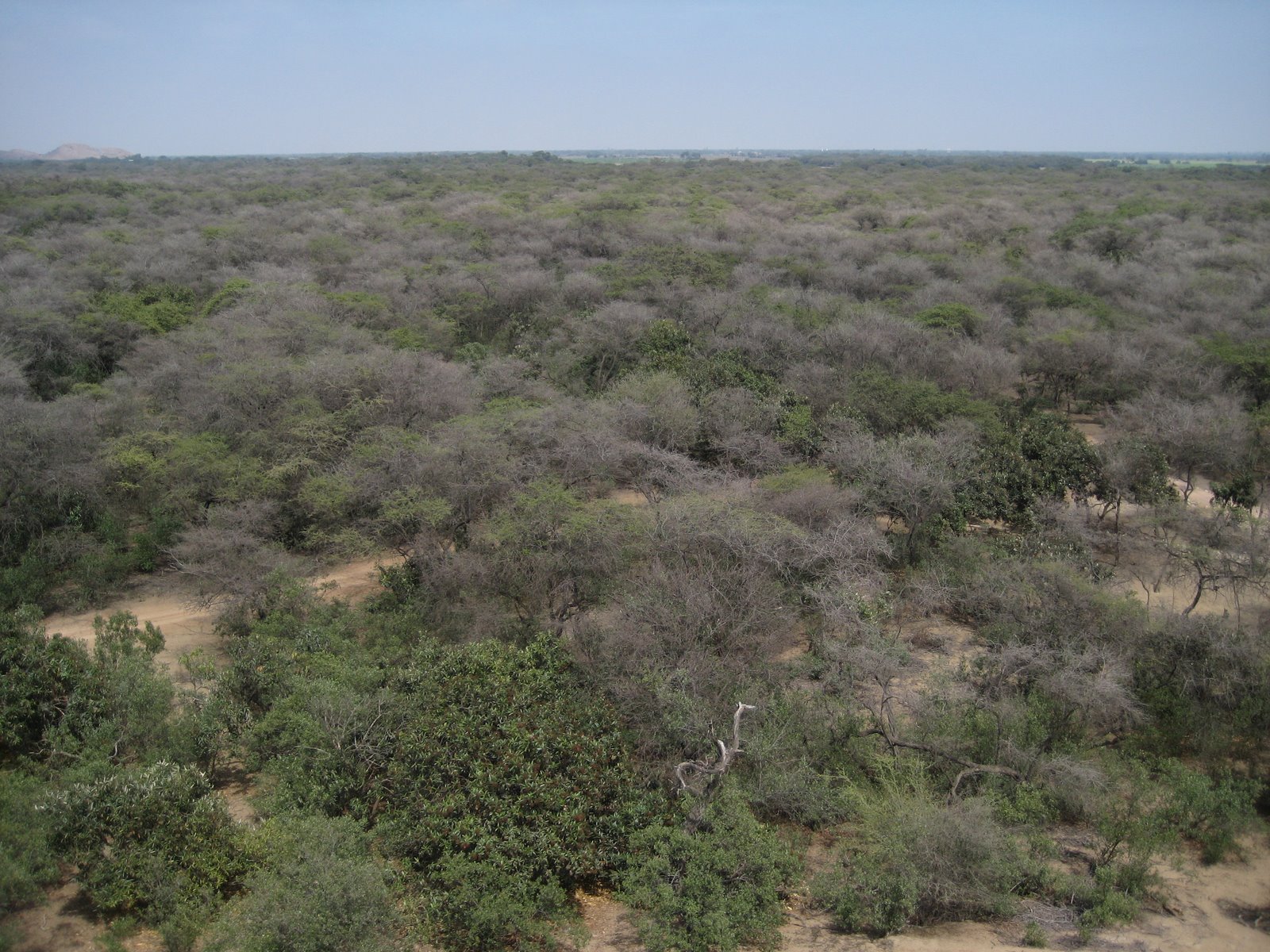
As I live in the aptly named dry forest, rain doesn’t so much happen. For the most part, I’ve hardly seen any moisture except for that which flows down from the Sierra in the so-called “Pomac River”, a small irrigation ditch. Then two nights ago at 2:30am I awoke to a downpour that persisted for 3 straight hours which, when you live in an adobe house with an aluminum roof, is an interesting experience. I got up to put a bucket under the part of my roof which consistently leaks even when it drizzles and a brief glance to the right revealed water beginning to flood from underneath the backdoor into my room. Of course that glance was followed by a panicked rush around my room trying to put all of the stuff that has no place to go in some kind of higher place. In a matter of minutes I had a good inch of water covering half of my room. A few minutes later my soaking wet host-cousin entered with a shovel and quickly constructed a dam outside my door, thus stopping any more water from entering. I had to sop up the mud and water that had entered and made some witty sarcastic comment to my host-mom about not planning on washing my floor at 3am which she didn’t get. We were up until 4am just milling about putting buckets in new locations and watching the neighbors down the way who were digging a canal around their house and leaving frequently with bucketfuls of water. It rained hard enough to take the paint off our house and to remove the dried mud from the fence around my bucket-bathing area. Two days later the rain is still the major topic of conversation.
Of course, those volunteers in the Sierra have a much different experience than those of us on the coast. Many of them spend around 5 months of the year in mud, and rain is a consistent part of their daily existence. My friend Aaron recently told me that they get so much rain at his site that washing clothes is pointless because they don’t dry. Thus, if he really wants clean clothes he wears them down into his capitol city wet and walks around until they dry.
On the topic of natural phenomena, we experienced a slight temblor (tremor) this morning. I was pretty sure that a large mango truck had run into our house while my 2 year old half-host-brother kept talking about the tenedor (fork) instead of the temblor.
On the topic of some other kind of phenomena, most likely globalization, my friend Susan discovered a new organization in her community which is run by her neighbor. Its official title is the Comité de Karate. Indeed, she has a karate committee in her site which is comical given that our sites don’t even qualify as pueblos. Apparently he learned it in the Peruvian Army. Regardless, it will be an interesting addition to her institutional inventory.
Finally, I’d like to send a big hello to the mother of my friend and fellow volunteer, Mateo. It turns out she hears from me, via my blog, more than Matt. Needless to say, Matt’s not overly thrilled with me. But, Matt’s Mom, in case you’re wondering, Matt is in fact alive and well.
Of course, those volunteers in the Sierra have a much different experience than those of us on the coast. Many of them spend around 5 months of the year in mud, and rain is a consistent part of their daily existence. My friend Aaron recently told me that they get so much rain at his site that washing clothes is pointless because they don’t dry. Thus, if he really wants clean clothes he wears them down into his capitol city wet and walks around until they dry.
On the topic of natural phenomena, we experienced a slight temblor (tremor) this morning. I was pretty sure that a large mango truck had run into our house while my 2 year old half-host-brother kept talking about the tenedor (fork) instead of the temblor.
On the topic of some other kind of phenomena, most likely globalization, my friend Susan discovered a new organization in her community which is run by her neighbor. Its official title is the Comité de Karate. Indeed, she has a karate committee in her site which is comical given that our sites don’t even qualify as pueblos. Apparently he learned it in the Peruvian Army. Regardless, it will be an interesting addition to her institutional inventory.
Finally, I’d like to send a big hello to the mother of my friend and fellow volunteer, Mateo. It turns out she hears from me, via my blog, more than Matt. Needless to say, Matt’s not overly thrilled with me. But, Matt’s Mom, in case you’re wondering, Matt is in fact alive and well.
Saturday, March 15, 2008
Thoughts on Development
I’ve now officially been in Perú for half of a year. Time is flying. After 3 months in site I’m starting to realize that 2 years might be gone in no time. Of course there are those days when it feels like it has been eons since I last drank cold skim milk and then two years seems like a long time.
I just returned to site after Reconnect, a reunion of sorts with all of the other volunteers of my training group. It was held in Huanchaco, a quaint beach town outside of Trujillo. I really can’t complain—hot showers, ocean views, good friends, no mosquitoes, and excellent ceviche all at once. We were there for about four days which is the longest I’ve been out of site since I got here. It was a refreshing break, primarily because it provided such an excellent opportunity to catch up with my friends from training. At the same time, it was a bit sobering because in the end I had to leave them again and head back to site where I’m are supposed to be the perfect motivated volunteer.
Actually, by the time I got back to site I was ready. It was nice to realize that my family was glad to see me and that I could have a conversation with them which went beyond a conversation that would occur between mere acquaintances. Unfortunately, that conversation wasn’t all that cheerful. Within a few minutes my host-mom divulged to me that the school director had stopped by and accused me of stealing eight chairs and a hose from the school room I used this summer. This is the same room which now includes a half-painted yellow wall. What he thinks I want with 8 miniature chairs is beyond me. I mean, my room’s honestly not that large and even if I were crazy enough to invite 8 children into it, I don’t think I’d feel compelled to provide seating.
This morning I found out from the town authority that the director actually filed a report against me. The good news is that the town authority also reassured me that he will help me if there are any problems. I’m pretty sure that no one in my town thinks I’m at fault so I feel better than I did at first, when I wanted to cry. Basically, it just wasn’t what I wanted to deal with within minutes of returning to site.
I was also approached by a woman who immediately jumped into a vivid description of an ailing squirrel that she had been keeping in her house while I was gone. After she had detailed all of its symptoms she paused. By the time the pause got awkward I realized she was waiting for a diagnosis. Apparently she thought I would know what to do. I mentioned something about antibiotics or something and that seemed to please her. Now she still thinks I know how to treat squirrels.
Anyway, I was thinking that since I’ve been at site for 3 months now, it would be a good time to detail some of my thoughts on international development, since that’s what I’m supposedly working in. So far my thoughts haven’t changed too much since being here but I’ve definitely learned a lot. It’s strange but it’s still hard for me to realize that I’m even in the Peace Corps. There are times when it is blatantly obvious, but it still doesn’t sink in. Sometimes I wish it would hit me. I think it would feel more like reality to a visitor who merely observed my existence as a PCV.
This is closely related to my thoughts of what it is that I’m actually doing here, which also remain somewhat fuzzy. I can’t deny that it’s an amazing opportunity to live here for two years in Perú and basically for free. On the whole, I can’t see that PCVs do any negative damage and most likely they have a positive impact on their communities. As far as I can tell there are many positives to the PC development model. Already I have witnessed serious flaws with other NGOs/missionaries I’ve seen working here. More than anything, the positive side of the PC is that volunteers are in site long term and have a decent grasp of what the local population needs and has the time to establish a decently sustainable project. However, that being said, something like $40,000 is spent per volunteer every year when you include the costs of administration (but don´t quote me on that). I can’t help but think that this money would be better off spent developing programs in the U.S. itself. Also, as the benefit of the PC development model is that the volunteers are present long term, it follows that true change is most likely internal, coming from the people themselves who are forever present. As my friend Leslie, a current PCV in The Gambia, put it, she can’t have a full time job, her own last name and a birth control prescription because feminists from Asia came to the US sixty years ago and fought for it.
When it comes down to it, my opinion is that true development—taken to mean a positive change towards a peaceful and sustainable future—means working within ones own community and culture. International relations are crucial but international development probably exists due to notions of the exotic. Perhaps a PCV is successful at establishing improved cooking stoves but that positive impact must pale in comparison to the negative impact of our anti-drug trade policy in Colombia or the impact of the American lifestyle. It seems that the actual problem is a lack of consciousness and interest among both privileged and impoverished populations. Here, while they are indeed living in conditions of poverty, it seems that they could chose to spend their money more wisely and actually participate in community projects and see improvement in their quality of life. Likewise, Americans could change policies to allow for a more even distribution of wealth and could change their overindulgent lifestyle to diminish impacts on the rest of the world. The difference is that the impoverished population must work twice as hard to achieve a positive change—through working for a living and extra time spent aiding the community—while the average Unitedstatsian would have to think a bit harder about what’s actually important in life and follow through by making more unselfish decisions. It’s pretty clear that the U.S. lifestyle is sustained with the resources of so-called third world countries. How else do you explain how a country as rich in resources as Perú is so impoverished?
Anyway, I think that change lies in participation and awareness, something lacking both in Peru and the States. If anything, the PC is a wonderful organization in one regard which is forcing its volunteers to experience, albeit superficially, the culture of another country. We´ll see how my thoughts change over the next 21 months.
I just returned to site after Reconnect, a reunion of sorts with all of the other volunteers of my training group. It was held in Huanchaco, a quaint beach town outside of Trujillo. I really can’t complain—hot showers, ocean views, good friends, no mosquitoes, and excellent ceviche all at once. We were there for about four days which is the longest I’ve been out of site since I got here. It was a refreshing break, primarily because it provided such an excellent opportunity to catch up with my friends from training. At the same time, it was a bit sobering because in the end I had to leave them again and head back to site where I’m are supposed to be the perfect motivated volunteer.
Actually, by the time I got back to site I was ready. It was nice to realize that my family was glad to see me and that I could have a conversation with them which went beyond a conversation that would occur between mere acquaintances. Unfortunately, that conversation wasn’t all that cheerful. Within a few minutes my host-mom divulged to me that the school director had stopped by and accused me of stealing eight chairs and a hose from the school room I used this summer. This is the same room which now includes a half-painted yellow wall. What he thinks I want with 8 miniature chairs is beyond me. I mean, my room’s honestly not that large and even if I were crazy enough to invite 8 children into it, I don’t think I’d feel compelled to provide seating.
This morning I found out from the town authority that the director actually filed a report against me. The good news is that the town authority also reassured me that he will help me if there are any problems. I’m pretty sure that no one in my town thinks I’m at fault so I feel better than I did at first, when I wanted to cry. Basically, it just wasn’t what I wanted to deal with within minutes of returning to site.
I was also approached by a woman who immediately jumped into a vivid description of an ailing squirrel that she had been keeping in her house while I was gone. After she had detailed all of its symptoms she paused. By the time the pause got awkward I realized she was waiting for a diagnosis. Apparently she thought I would know what to do. I mentioned something about antibiotics or something and that seemed to please her. Now she still thinks I know how to treat squirrels.
Anyway, I was thinking that since I’ve been at site for 3 months now, it would be a good time to detail some of my thoughts on international development, since that’s what I’m supposedly working in. So far my thoughts haven’t changed too much since being here but I’ve definitely learned a lot. It’s strange but it’s still hard for me to realize that I’m even in the Peace Corps. There are times when it is blatantly obvious, but it still doesn’t sink in. Sometimes I wish it would hit me. I think it would feel more like reality to a visitor who merely observed my existence as a PCV.
This is closely related to my thoughts of what it is that I’m actually doing here, which also remain somewhat fuzzy. I can’t deny that it’s an amazing opportunity to live here for two years in Perú and basically for free. On the whole, I can’t see that PCVs do any negative damage and most likely they have a positive impact on their communities. As far as I can tell there are many positives to the PC development model. Already I have witnessed serious flaws with other NGOs/missionaries I’ve seen working here. More than anything, the positive side of the PC is that volunteers are in site long term and have a decent grasp of what the local population needs and has the time to establish a decently sustainable project. However, that being said, something like $40,000 is spent per volunteer every year when you include the costs of administration (but don´t quote me on that). I can’t help but think that this money would be better off spent developing programs in the U.S. itself. Also, as the benefit of the PC development model is that the volunteers are present long term, it follows that true change is most likely internal, coming from the people themselves who are forever present. As my friend Leslie, a current PCV in The Gambia, put it, she can’t have a full time job, her own last name and a birth control prescription because feminists from Asia came to the US sixty years ago and fought for it.
When it comes down to it, my opinion is that true development—taken to mean a positive change towards a peaceful and sustainable future—means working within ones own community and culture. International relations are crucial but international development probably exists due to notions of the exotic. Perhaps a PCV is successful at establishing improved cooking stoves but that positive impact must pale in comparison to the negative impact of our anti-drug trade policy in Colombia or the impact of the American lifestyle. It seems that the actual problem is a lack of consciousness and interest among both privileged and impoverished populations. Here, while they are indeed living in conditions of poverty, it seems that they could chose to spend their money more wisely and actually participate in community projects and see improvement in their quality of life. Likewise, Americans could change policies to allow for a more even distribution of wealth and could change their overindulgent lifestyle to diminish impacts on the rest of the world. The difference is that the impoverished population must work twice as hard to achieve a positive change—through working for a living and extra time spent aiding the community—while the average Unitedstatsian would have to think a bit harder about what’s actually important in life and follow through by making more unselfish decisions. It’s pretty clear that the U.S. lifestyle is sustained with the resources of so-called third world countries. How else do you explain how a country as rich in resources as Perú is so impoverished?
Anyway, I think that change lies in participation and awareness, something lacking both in Peru and the States. If anything, the PC is a wonderful organization in one regard which is forcing its volunteers to experience, albeit superficially, the culture of another country. We´ll see how my thoughts change over the next 21 months.
Saturday, March 8, 2008
Misconceptions, Mosquitoes, and Foot Doctors:
Misconceptions:
Perhaps it was stupid to think that after three months in my site everybody would know my name. I thought that most people had gotten it straight but then my friend Val came to visit and as we walked around town I got a series of “¡Hola, Carol!” “¡Buenos días, Kari!” and “¿Como estás Katy?” The only other person in town named Karen even called me Carol.
Another man in my site asked me how old I was and was shocked when I revealed that I was only twenty-three. Apparently he thought I was forty years old. Seriously, he thought I was forty. That would explain why many of the people in my site ask me where my kids and husband are. It does not explain why several people have asked me if Susan, the neighboring volunteer who also happens to be 23 years old, was my mother. If they think I’m forty that would put Susan at least at 55, assuming she had me at the age of 15.
Those who don’t think Susan is my mother are convinced that she is my sister. Val of course is yet another sister. Maybe if enough people come to visit they’ll start to realize that I am not related to all of the other Peace Corps volunteers. Given the average size of Peruvian families, that could take quite a few visitors.
At least one man in my site also thinks that I am an archeologist. Every time he sees me he stops to give me a pep talk that includes at least 15 minutes of uninterruptible encouragement and thanks. The last time he saw me he decided to focus on how great it is that I’m an archeologist. Apparently the confusion with anthropologist and archeologist is worldwide. It would be interesting to know what it is exactly he thinks I’m doing here with my technical digging skills.
Mosquitoes:
There’s not much to say on this subject except that there are mosquitoes everywhere. Mosquitoes are probably the most common topic of discussion, right up there with the weather. On that note, I’m getting pretty good at dragging out mosquito and weather conversations. At first I used them to fill in awkward silences but lately I find myself actually taking an interest in conversations that go something like this:
—“It’s making heat.”
—“Ah yeah.”
—“The sun itself makes the heat.”
—“Of course.”
—“Ahh, what a rich little air.”
—“Yes, what rich air.”
—“Tall mosquitoes, eh?”
(followed by horrified looks when he/she spots the multitude of bug bites on my legs)
—“Ah yeah, they sting me.”
—“Ah yeah. There sure are a lot of mosquitoes.”
—“It’s making heat.”
—“Yes, it’s making heat.”
At the point when my fellow community member spies the bites I’m sporting, the conversation often turns to possible remedies. Usually they tell me to put on some Vick’s Vapor Rub which they all call Viva Perú. I’ve been told that lemon juice and rubbing alcohol should be utilized as well. They also usually ask me where the bugs have been biting me. Where have they not been biting me?!?! I don’t understand how these people are avoiding them. We are surrounded by rice paddies so they’re basically breeding mosquitoes.
Foot Doctors:
I finally made it to an orthopedist to get my foot examined. Since almost no one runs here I think he had no experience with sports related injuries. After looking at the x-rays he took all of about 30 seconds to examine my feet. He felt both of them without asking me where it hurt and then told me there was nothing wrong. I tried probing him about arches, tendonitis, etc., to no avail as he was still convinced that there was absolutely nothing wrong. He prescribed me a pain cream and sent me on my way. I should have gotten the hint when I noted that his one room office was also the office for trauma and brain surgery. I just hope he’s not the neurosurgeon too.
Perhaps it was stupid to think that after three months in my site everybody would know my name. I thought that most people had gotten it straight but then my friend Val came to visit and as we walked around town I got a series of “¡Hola, Carol!” “¡Buenos días, Kari!” and “¿Como estás Katy?” The only other person in town named Karen even called me Carol.
Another man in my site asked me how old I was and was shocked when I revealed that I was only twenty-three. Apparently he thought I was forty years old. Seriously, he thought I was forty. That would explain why many of the people in my site ask me where my kids and husband are. It does not explain why several people have asked me if Susan, the neighboring volunteer who also happens to be 23 years old, was my mother. If they think I’m forty that would put Susan at least at 55, assuming she had me at the age of 15.
Those who don’t think Susan is my mother are convinced that she is my sister. Val of course is yet another sister. Maybe if enough people come to visit they’ll start to realize that I am not related to all of the other Peace Corps volunteers. Given the average size of Peruvian families, that could take quite a few visitors.
At least one man in my site also thinks that I am an archeologist. Every time he sees me he stops to give me a pep talk that includes at least 15 minutes of uninterruptible encouragement and thanks. The last time he saw me he decided to focus on how great it is that I’m an archeologist. Apparently the confusion with anthropologist and archeologist is worldwide. It would be interesting to know what it is exactly he thinks I’m doing here with my technical digging skills.
Mosquitoes:
There’s not much to say on this subject except that there are mosquitoes everywhere. Mosquitoes are probably the most common topic of discussion, right up there with the weather. On that note, I’m getting pretty good at dragging out mosquito and weather conversations. At first I used them to fill in awkward silences but lately I find myself actually taking an interest in conversations that go something like this:
—“It’s making heat.”
—“Ah yeah.”
—“The sun itself makes the heat.”
—“Of course.”
—“Ahh, what a rich little air.”
—“Yes, what rich air.”
—“Tall mosquitoes, eh?”
(followed by horrified looks when he/she spots the multitude of bug bites on my legs)
—“Ah yeah, they sting me.”
—“Ah yeah. There sure are a lot of mosquitoes.”
—“It’s making heat.”
—“Yes, it’s making heat.”
At the point when my fellow community member spies the bites I’m sporting, the conversation often turns to possible remedies. Usually they tell me to put on some Vick’s Vapor Rub which they all call Viva Perú. I’ve been told that lemon juice and rubbing alcohol should be utilized as well. They also usually ask me where the bugs have been biting me. Where have they not been biting me?!?! I don’t understand how these people are avoiding them. We are surrounded by rice paddies so they’re basically breeding mosquitoes.
Foot Doctors:
I finally made it to an orthopedist to get my foot examined. Since almost no one runs here I think he had no experience with sports related injuries. After looking at the x-rays he took all of about 30 seconds to examine my feet. He felt both of them without asking me where it hurt and then told me there was nothing wrong. I tried probing him about arches, tendonitis, etc., to no avail as he was still convinced that there was absolutely nothing wrong. He prescribed me a pain cream and sent me on my way. I should have gotten the hint when I noted that his one room office was also the office for trauma and brain surgery. I just hope he’s not the neurosurgeon too.
Monday, February 25, 2008
Carnaval
Most likely you’ve heard of the Latin American tradition of Carnaval, a celebration held before the start of Lent. The most famous fiestas take place in Brazil and, within Peru, the craziest celebrations seem to take place in Cajamarca. While I did not find myself in Cajamarca to celebrate Carnaval, I did make my way to Pacora, my municipality and the closest town to my site.
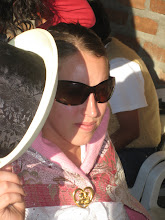
On the Northern coast of Perú where I’m located Carnaval is celebrated during the weeks leading up to Lent with sporadic water fights. In Pacora it culminates with a big fiesta that has evolved into a competition between two teams, el bando verde (green) and el bando rojo (red). Team loyalties are seemingly random and can change from year to year. This year my community opted to support the red team and, given that my sister was chosen to represent the rural sector of Pacora as the princess of the bando rojo, I decided to lend my support and wear red. Thinking that clothing would be my only mode of participation was plain naïve.
Somehow I got involved in the getting ready process and was appointed to do the hair of the junior princess of my community. I tried to explain that it was a bad idea but they wouldn’t have it. Thus, I was instructed to copy what they were doing to my sister’s hair. It seemed simple enough except that they have approximately 10 times the amount of hair than the average person from the U.S. The poor girl ended up with an elegant looking mullet/rat tail. Furthermore, I repeatedly had to ask for the comb without using the word comb because it is uncomfortably close to the Spanish word for male genitalia. They were probably starting to think that I lack any form of memory. I did learn that lime juice is an excellent substitute for hair gel and that curls can be created with a bit of lime juice, newspaper and a strip of plastic bag.
I was told that transport to the event would be provided and indeed it was. Transport was a large mango truck that drove us straight to Pacora and then to my surprise straight into a parade. The parade was no normal parade and I ended up riding front and center at the feet of the two princesses down every street of Pacora while we were occasionally sprayed with water or perfume and people got progressively more impassioned about belonging to the bando rojo, yelling things like “Rojo vive, carajo!”
The parade lasted for some ungodly amount of time, considering the small size of Pacora, which would most certainly qualify as podunk. It ended at the plaza where two stages were set up, one for each team. Which ever team has more people dancing and can dance for the longest amount of time wins. Upon arrival I was quickly whisked into the mob of dancers by some random lady. Within minutes she had introduced me to all three of her sons. She was probably on the verge of suggesting an engagement when I ran away to find Susan.
Susan and I were stopped by a random older man to take a picture with him. Why a picture with two random white people is so desirable is somewhat baffling to me. It’s pretty much the same as getting your picture taken with two random Chinese people. What do you say to the people you show that to? I have no clue who these people are but look, they’re Chinese!
I was not a bit shocked when I saw that each group had a tree in the middle of its dance floor and noted that these trees were laden with tuppers in their branches. The trees, called yunsa, are a traditional part of the carnaval festivities. I’m not sure when the tupper bit got added. Anyway, the tuppers are free for the taking when they fall from the branches. There were things like pee buckets, pitchers and strainers in those branches and I had to leave before anything fell. This was probably for the best because I can only fathom that a falling tupper incurs a rather aggressive struggle for possession.
On the Northern coast of Perú where I’m located Carnaval is celebrated during the weeks leading up to Lent with sporadic water fights. In Pacora it culminates with a big fiesta that has evolved into a competition between two teams, el bando verde (green) and el bando rojo (red). Team loyalties are seemingly random and can change from year to year. This year my community opted to support the red team and, given that my sister was chosen to represent the rural sector of Pacora as the princess of the bando rojo, I decided to lend my support and wear red. Thinking that clothing would be my only mode of participation was plain naïve.
Somehow I got involved in the getting ready process and was appointed to do the hair of the junior princess of my community. I tried to explain that it was a bad idea but they wouldn’t have it. Thus, I was instructed to copy what they were doing to my sister’s hair. It seemed simple enough except that they have approximately 10 times the amount of hair than the average person from the U.S. The poor girl ended up with an elegant looking mullet/rat tail. Furthermore, I repeatedly had to ask for the comb without using the word comb because it is uncomfortably close to the Spanish word for male genitalia. They were probably starting to think that I lack any form of memory. I did learn that lime juice is an excellent substitute for hair gel and that curls can be created with a bit of lime juice, newspaper and a strip of plastic bag.
I was told that transport to the event would be provided and indeed it was. Transport was a large mango truck that drove us straight to Pacora and then to my surprise straight into a parade. The parade was no normal parade and I ended up riding front and center at the feet of the two princesses down every street of Pacora while we were occasionally sprayed with water or perfume and people got progressively more impassioned about belonging to the bando rojo, yelling things like “Rojo vive, carajo!”
The parade lasted for some ungodly amount of time, considering the small size of Pacora, which would most certainly qualify as podunk. It ended at the plaza where two stages were set up, one for each team. Which ever team has more people dancing and can dance for the longest amount of time wins. Upon arrival I was quickly whisked into the mob of dancers by some random lady. Within minutes she had introduced me to all three of her sons. She was probably on the verge of suggesting an engagement when I ran away to find Susan.
Susan and I were stopped by a random older man to take a picture with him. Why a picture with two random white people is so desirable is somewhat baffling to me. It’s pretty much the same as getting your picture taken with two random Chinese people. What do you say to the people you show that to? I have no clue who these people are but look, they’re Chinese!
I was not a bit shocked when I saw that each group had a tree in the middle of its dance floor and noted that these trees were laden with tuppers in their branches. The trees, called yunsa, are a traditional part of the carnaval festivities. I’m not sure when the tupper bit got added. Anyway, the tuppers are free for the taking when they fall from the branches. There were things like pee buckets, pitchers and strainers in those branches and I had to leave before anything fell. This was probably for the best because I can only fathom that a falling tupper incurs a rather aggressive struggle for possession.
Subscribe to:
Posts (Atom)