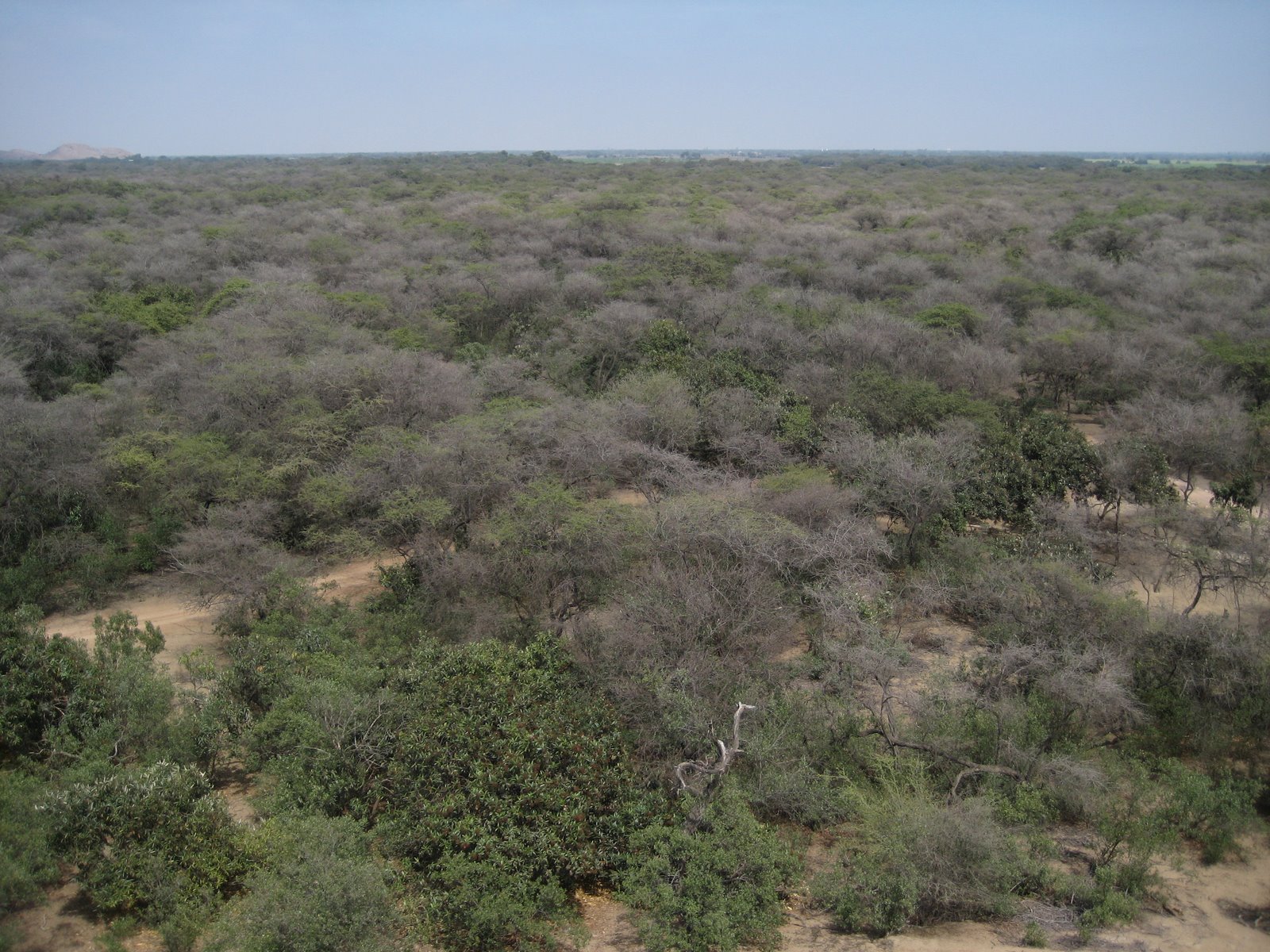
Reminiscent of an aging highway in the states, the old Pan-American feels a bit used, a bit dusty. Pacora, the closest town to my community, is cut by it, as are all of the towns out in my direction. Once the major road between Piura and Chiclayo, but no longer, it is still highly trafficked. As opposed to a highway in the States, personal vehicles contribute to a small amount of the traffic. The cars you’ll encounter on the Pan-American are primarily dedicated to public transport and to the transport of goods.
In the category of public transport you’ll see moto-taxis, estations (station wagon taxis), ticos (random sketchy car taxis), combis (van taxis), and double-decker tourist buses. Of those, the scariest to watch are probably the tourist buses. They kind of wobble down the road at high speeds, tilting from side to side. The most dangerous to ride in are probably the combis. I’ve yet to meet a combi driver whose driving skills I completely trust. And I’ve never been in a combi with seatbelts for anyone but the driver and one of the front seat passengers. Sometimes the seatbelt isn’t even real but they require you to wear it anyway so they won’t get in trouble with the law. I always refuse, telling them it’s their own fault if they get stopped. It’s one of the only things I ever get into arguments about. They always give in.
More entertaining are the vehicles used for the movement of goods. These range from donkey carts to semis. However, the most colorful are what I refer to as mango trucks because during mango season their primary task is to transport mangos from field to market. These are like no small-semi you’ve ever seen. They are always painted in obnoxiously bright colors and on the back they usually are adorned with a larger-than-life religious image, often an agonized and dying Jesus. One of my goals while in Perú is to capture a picture of one of these mango trucks that is transporting corn. For some reason, when they load them with corn they just go crazy and they don’t stop loading until the corn is piled to a height nearly double that of the truck and protruding from the back.
Rules of the road? At first glance, it appears that there really aren’t any. And when it comes to obeying the official laws I’d say that first glance is accurate. I have personally witnessed the hand-signal language of combi drivers which is used to alert fellow divers to temporarily obey the law when cops are present. That probably has something do with the alarming number or crosses and little chapels dotting the side of the road commemorating people who have died in accidents. Otherwise it is just controlled chaos. While the Pan-American appears to be only a two lane road, it can at times have up to four lanes. Passing is not reserved for when no one is approaching in the other lane. Rather, it is expected that on-coming traffic will take note and move on over to the shoulder.
Thursday, September 25, 2008

Thursday, September 18, 2008
¡Que viva el santo!
On Monday I turned 24. I wasn’t sure if anyone would even know, so I was prepared to pass the day like any other. However, a group of somewhat random women ended up organizing a small party which consisted of cake, papa a la huancaína, wine that tasted slightly better than cough syrup, a cocktail, some singing and plenty of somewhat forced and awkward dancing. I had to dance the Marinera with every single person in attendance even though it’s pretty complicated and none of them could dance it either. They also serenaded me which was pretty hilarious in itself. My counter-part, who out of nowhere busted out a perfect tenor voice, sang the main part, while the rest of them, all with horrible voices, sang the chorus. I tried to thank them, but I couldn’t really figure out a way to truly convey just how much I appreciated it. Considering how little they have, and that they rarely buy cakes for their own birthday parties, it was extremely generous.
Back at home I invited my host-mother to some cake. Earlier I had gone to the house to invite her to the party. She actually had no idea it was my birthday and was a bit surprised. However, she said nothing like, “Oh my goodness! I had no idea. Happy birthday!” No, she said, “I already ate lunch,” and didn’t come to the party. Still, as I offered her the cake I assumed that we were on good terms. Then came a diatribe about how she was mad at me for having my birthday party at another person’s house. She refused the cake, telling me that I should have told her it was my birthday, because she would have bought me a cake. Maybe it was my fault, but I would have felt awkward telling her “Tomorrow’s my birthday; maybe you should throw me a party.” I tried in vain to explain that I had not actually chosen to celebrate my birthday in the house of another and that I wouldn’t have even celebrated if it hadn’t been for those women. At this point she told me she didn’t believe me. She looked pissed. I got upset, put the cake down, thanked her for wishing me a happy birthday and walked away. She followed me into my room, continuing to explain that she was highly offended. I mean, what would my real mother say when she found out that I had not had my party in my own house?!
I started looking for a new house/family. It’s really not that easy and kind of over-whelming. There are only 50 families in my town and at least half of them are related to my host-mom, if not more. Furthermore, most of them do not have any extra rooms. It´s also far more difficult to chose a host-family now that I know so many of the habits and histories of the families. I approached one señora who previously offered me a room, but she told me that she didn´t want any problems with my current host-mom. By the time she started listing other families I could live with, I had pretty much gotten the hint.
-------
As far as birthday celebrations are concerned, many volunteers dislike them. In the Peruvian campo, they are usually family affairs and consist of a circle of people drinking, usually for many hours. I, however, usually find them quite entertaining. The last one I went to was already in full swing by the time I got there. It was me and eight other people. I got stuck between two very campo men who had already been drinking for awhile. Most of the time they were both talking to me at the same time. One of them kept bursting into song. He sang with such force and frequency that it was difficult for anyone else to carry on a conversation. When the food came out and I didn´t eat (because they had just served me a special plate of food), he insisted that I at least consume the spoonful that he was waving around in my face. I told him I couldn´t eat the big hunk of meat on it so he picked it out with his fingers, in the process knocking beans all over my lap. The man on the other side of me was delighted when I told him that it is indeed legal for me to marry a Peruvian. He proceeded to warn me about Peruvian males, and told me that it was okay for me to date them, but that I should never remove my bra. He got stuck on this subject and told me at least four more times before he decided to share his advice with the rest of the group. I left around the time someone was asking me to pronounce my last name in Peruvian.
Back at home I invited my host-mother to some cake. Earlier I had gone to the house to invite her to the party. She actually had no idea it was my birthday and was a bit surprised. However, she said nothing like, “Oh my goodness! I had no idea. Happy birthday!” No, she said, “I already ate lunch,” and didn’t come to the party. Still, as I offered her the cake I assumed that we were on good terms. Then came a diatribe about how she was mad at me for having my birthday party at another person’s house. She refused the cake, telling me that I should have told her it was my birthday, because she would have bought me a cake. Maybe it was my fault, but I would have felt awkward telling her “Tomorrow’s my birthday; maybe you should throw me a party.” I tried in vain to explain that I had not actually chosen to celebrate my birthday in the house of another and that I wouldn’t have even celebrated if it hadn’t been for those women. At this point she told me she didn’t believe me. She looked pissed. I got upset, put the cake down, thanked her for wishing me a happy birthday and walked away. She followed me into my room, continuing to explain that she was highly offended. I mean, what would my real mother say when she found out that I had not had my party in my own house?!
I started looking for a new house/family. It’s really not that easy and kind of over-whelming. There are only 50 families in my town and at least half of them are related to my host-mom, if not more. Furthermore, most of them do not have any extra rooms. It´s also far more difficult to chose a host-family now that I know so many of the habits and histories of the families. I approached one señora who previously offered me a room, but she told me that she didn´t want any problems with my current host-mom. By the time she started listing other families I could live with, I had pretty much gotten the hint.
-------
As far as birthday celebrations are concerned, many volunteers dislike them. In the Peruvian campo, they are usually family affairs and consist of a circle of people drinking, usually for many hours. I, however, usually find them quite entertaining. The last one I went to was already in full swing by the time I got there. It was me and eight other people. I got stuck between two very campo men who had already been drinking for awhile. Most of the time they were both talking to me at the same time. One of them kept bursting into song. He sang with such force and frequency that it was difficult for anyone else to carry on a conversation. When the food came out and I didn´t eat (because they had just served me a special plate of food), he insisted that I at least consume the spoonful that he was waving around in my face. I told him I couldn´t eat the big hunk of meat on it so he picked it out with his fingers, in the process knocking beans all over my lap. The man on the other side of me was delighted when I told him that it is indeed legal for me to marry a Peruvian. He proceeded to warn me about Peruvian males, and told me that it was okay for me to date them, but that I should never remove my bra. He got stuck on this subject and told me at least four more times before he decided to share his advice with the rest of the group. I left around the time someone was asking me to pronounce my last name in Peruvian.
Saturday, September 6, 2008
Kidneys and Chinos
At least in the rural parts of coastal Peru, a day rarely passes without someone mentioning that they are suffering from kidney pain. When I first arrived I was perplexed by how many people were afflicted by this strange and ubiquitous “dolor de riñones.” I mean, kidney pain sounds like it should be taken pretty seriously. Eventually I figured out that most people here confuse back pain with kidney pain and any mention of kidney pain became a little less alarming. However, the other day I was especially amused when one woman, complaining of extreme shoulder pain, was immediately diagnosed by a fellow woman as suffering from a kidney ailment. She said, perfectly serious, “Oh, that’s gotta be your kidneys,” followed by a chorus of “Yep, definitely the kidneys,” from the other six women standing in the circle around her. Unanimously they agreed that she should go to the health post for a series of shots that would cure her kidney ailment. I wasn’t sure what I could say at the moment without butting directly in the head with the kidney myth, so I waited awhile until the woman was a bit separated from the group. I kind of sidled up to her furtively, fearful of being reproached by the rest of the women, and whispered, “It might not be your kidneys…it could be your muscle. I think you should try icing it.” Of course, she went to the health post.
The Beijing Olympics highlighted another custom—the practice of calling all slightly Asian looking people “Chino.” The country of origin really is of no importance. Even many Peruvians have the nickname. Thus, just imagine the opening ceremony. There were the Japanese Chinos, the Chinese Chinos, the Korean Chinos, etc. During one gymnastics event, the Peruvian announcer was highly perplexed by the presence of an Asian-American athlete. His commentary went something like this: “And now we have a Chino…wait, it appears that he’s not a Chino…he’s American…but still a Chino?!…Well, he likes Chinese food!”
-------
The Beijing Olympics highlighted another custom—the practice of calling all slightly Asian looking people “Chino.” The country of origin really is of no importance. Even many Peruvians have the nickname. Thus, just imagine the opening ceremony. There were the Japanese Chinos, the Chinese Chinos, the Korean Chinos, etc. During one gymnastics event, the Peruvian announcer was highly perplexed by the presence of an Asian-American athlete. His commentary went something like this: “And now we have a Chino…wait, it appears that he’s not a Chino…he’s American…but still a Chino?!…Well, he likes Chinese food!”
-------
I bought an English shirt which looks roughly like this:
Ever mode honey girls
they’re been together
EVERY
UGIZ
EARTH
Ever mode honey girls
they’re been together
EVERY
UGIZ
EARTH
And Luck
GOOD
Seriously? Ugiz?!
-------
GOOD
Seriously? Ugiz?!
-------
The neighbors named their new dog Gringa. Should I be offended? I mean, I’ve never really seen an ugly puppy but this one would be right up there with the best of them. I believe they got the idea from the many patches of white skin which have appeared through its brown fur due to excessive fleas.
-------
Municipality update: So I went there for the millionth time at least and was told, yet again, that the Presupuesto Participativo had been postponed. I'm still waiting to figure out if they are going to fund my improved cooking stove project. Then, while talking with the mayor about waste management, he suggested that we continue the subject over pizza...and then recommended a nice hotel...which we could stay in. How nice.
Monday, September 1, 2008
Bwuuuu
There is a noise they make here—kind of like a high-pitched bwuuuu—that would perfectly describe how I feel about the past week. You’ll probably notice it the next time you see me, because I can’t seem to converse without it now. Its meaning is flexible but tends to convey something along the lines of “Good God!” In this case, if I used it you would understand it as “Oh my God, you don’t even know!” But that was last week and, after a bout of crying in the municipality, I’m feeling much better. Yes, I cried in the local municipality. I’m sure they think I’m emotionally unbalanced.
I cried not because I was actually that upset that I was being denied funds through the Presupuesto participativo, but because I was repeatedly being told that my entire concept of development, whatever that is, was just plain naïve, and that the people will never change. The idealist in me cried. The realist in me was discouraged, because realistically I don’t believe positive sustainable change is possible without a good dose of idealism.
I left emotionally drained and laughed in the park with Susan harder than I have in a long time. I think it was somewhat of a turning point. If I actually wish to see some kind of shift in mentality among the people in my community I have to start looking at my work more like a job. No one really takes me very seriously and maybe I haven’t given them enough of a reason to.
Up until this point I think I have been walking on eggshells, tripping over myself just to avoid offending anyone because I live here and because I’m supposed to integrate. But I’ve got to be more honest with people. Not everything is perfect here. Everyone burns their trash. No one recycles. The development committee is defunct. People are perfectly capable of telling me that they have no money for an improved cooking stove and then buying S/70 of beer. Of course it’s all normal, but that doesn’t mean it should be.
I cried not because I was actually that upset that I was being denied funds through the Presupuesto participativo, but because I was repeatedly being told that my entire concept of development, whatever that is, was just plain naïve, and that the people will never change. The idealist in me cried. The realist in me was discouraged, because realistically I don’t believe positive sustainable change is possible without a good dose of idealism.
I left emotionally drained and laughed in the park with Susan harder than I have in a long time. I think it was somewhat of a turning point. If I actually wish to see some kind of shift in mentality among the people in my community I have to start looking at my work more like a job. No one really takes me very seriously and maybe I haven’t given them enough of a reason to.
Up until this point I think I have been walking on eggshells, tripping over myself just to avoid offending anyone because I live here and because I’m supposed to integrate. But I’ve got to be more honest with people. Not everything is perfect here. Everyone burns their trash. No one recycles. The development committee is defunct. People are perfectly capable of telling me that they have no money for an improved cooking stove and then buying S/70 of beer. Of course it’s all normal, but that doesn’t mean it should be.
Monday, August 25, 2008
Spoons
Some weeks fly by, others just seem to keep going and going. This would be one of those weeks, one of those “Oh my god could this week really go any slower?” weeks. Occasionally, that’s a good thing but not usually. Hence, the saying “Time flies when you’re having fun.” And honestly, things are not that bad, but I’ve had better weeks. Let me explain.
Monday: I rushed to the Health Post for my first sign-up for the improved cooking stove project I organized only to sit there for, oh, six hours. One person happened to stop by and chat and, as an afterthought, signed up for his FREE stove. As everyone in my community was well-informed I expected an impressive turn-out.
Tuesday: I lost my cell-phone for the second time.
Wednesday: My six year old friend informed me that the neighbor stole bamboo from me.
Thursday: An unexpected visit from my friend Susan, alarmed that I might be dead in a ditch because I wasn’t answering my phone, came at the perfect time. However, in the midst of our jubilant reunion she delicately broke the news that, due to the problems the municipality was experiencing during the Presupuesto Participativo process, it is no longer valid. In other words, I will most likely not receive money to do an improved cooking stove project.
Friday: Before I describe the seemingly insignificant event which provoked tears later as I was talking with the nurses at the health-post, let me back up to Thursday. As Susan was going to leave, my host-mom yelled at me for leaving my dirty dishes on the table. At this point, she must have noticed that I had, heaven forbid, borrowed one of her spoons. Now, back to Friday, I discovered that my host-mom had moved all of her silverware, a plethora really, to the only lockable drawer in her hutch, surely to prevent me from furtively stealing more of her apparently precious spoons. Maybe I’m over-reacting, but I’ve lived with this woman for NINE months. By now I imagined she would be affectionately calling me hija (daughter), a possibility which long ago went out the window. The least I could have hoped for was that, by this point she would care for me enough to share a spoon. I’d been living with the delusion that, despite her unfriendly façade, she secretly cared for me, but no one locks up her spoons from a trusted companion.
Also on Friday morning, she told me she wouldn’t be back until later in the afternoon, so I should prepare my own lunch. That was normal enough, but then she returned by 11:30 and ate with the neighbors and didn’t invite me, which culturally is insulting given the importance placed on sharing food with others. Basically, I’ve been living with a passive-aggressive old woman for the better part of a year, and I could go on about all of the little things she has done and not done to make me feel straight-up lousy, but, in general, I’ve had enough. So, I don’t know when or where, but I’m moving.
Weeks like this provoke plenty of thought about my actual purpose for being here. By that, I don’t even mean to suggest that I’ve considered leaving, because I’ve never come close. But it is natural to grasp for an explanation of why things aren’t going smoothly and very difficult when no simple explanation exists. I can not justify my disappointment in a lack of support from my community and my host-mom when, in all reality, it was my own decision to become a volunteer. Yes, they did request a volunteer, but can you blame them if they didn’t really understand the Peace Corps philosophy or care about it for that matter? It is difficult to understand the lack of involvement on the part of my community, when I can see how affective little changes in lifestyle could be. But couldn’t the majority of the human population be blamed for the same apathy? It’s not fair to place the blame on anyone when the factors behind the situation are, in all reality, so complicated as to be nearly indecipherable.
- - - - - -
I encountered another creature in my room—an owl. I think it was a Subtropical Pygmy Owl, but I’m generally terrible at bird identification.
- - - - - -
When I first arrived at site the nurses at the health post insisted on measuring my height because I didn’t know it in centimeters. Now, I’m pretty good at math, but I’m also lazy when it comes to doing math in my head. Thus, I took their measurement of 190cm as veritable fact and told everyone who asked that I was indeed 190cm. As they view me as somewhat of a giant, everyone believed me. I started doubting myself when a couple of times males who were taller than me reported their heights in the high 170s. Nonetheless, I never bothered to double check the measurement. Then recently I was watching the Olympics and the U.S. basketball team happened to come on. I wasn’t listening that intently, but when the announcer chanced to mention the height of Koby Bryant, a staggering 198cm, it caught my attention. I’d been telling everyone that I was nearly as tall as Koby Bryant!
Monday: I rushed to the Health Post for my first sign-up for the improved cooking stove project I organized only to sit there for, oh, six hours. One person happened to stop by and chat and, as an afterthought, signed up for his FREE stove. As everyone in my community was well-informed I expected an impressive turn-out.
Tuesday: I lost my cell-phone for the second time.
Wednesday: My six year old friend informed me that the neighbor stole bamboo from me.
Thursday: An unexpected visit from my friend Susan, alarmed that I might be dead in a ditch because I wasn’t answering my phone, came at the perfect time. However, in the midst of our jubilant reunion she delicately broke the news that, due to the problems the municipality was experiencing during the Presupuesto Participativo process, it is no longer valid. In other words, I will most likely not receive money to do an improved cooking stove project.
Friday: Before I describe the seemingly insignificant event which provoked tears later as I was talking with the nurses at the health-post, let me back up to Thursday. As Susan was going to leave, my host-mom yelled at me for leaving my dirty dishes on the table. At this point, she must have noticed that I had, heaven forbid, borrowed one of her spoons. Now, back to Friday, I discovered that my host-mom had moved all of her silverware, a plethora really, to the only lockable drawer in her hutch, surely to prevent me from furtively stealing more of her apparently precious spoons. Maybe I’m over-reacting, but I’ve lived with this woman for NINE months. By now I imagined she would be affectionately calling me hija (daughter), a possibility which long ago went out the window. The least I could have hoped for was that, by this point she would care for me enough to share a spoon. I’d been living with the delusion that, despite her unfriendly façade, she secretly cared for me, but no one locks up her spoons from a trusted companion.
Also on Friday morning, she told me she wouldn’t be back until later in the afternoon, so I should prepare my own lunch. That was normal enough, but then she returned by 11:30 and ate with the neighbors and didn’t invite me, which culturally is insulting given the importance placed on sharing food with others. Basically, I’ve been living with a passive-aggressive old woman for the better part of a year, and I could go on about all of the little things she has done and not done to make me feel straight-up lousy, but, in general, I’ve had enough. So, I don’t know when or where, but I’m moving.
Weeks like this provoke plenty of thought about my actual purpose for being here. By that, I don’t even mean to suggest that I’ve considered leaving, because I’ve never come close. But it is natural to grasp for an explanation of why things aren’t going smoothly and very difficult when no simple explanation exists. I can not justify my disappointment in a lack of support from my community and my host-mom when, in all reality, it was my own decision to become a volunteer. Yes, they did request a volunteer, but can you blame them if they didn’t really understand the Peace Corps philosophy or care about it for that matter? It is difficult to understand the lack of involvement on the part of my community, when I can see how affective little changes in lifestyle could be. But couldn’t the majority of the human population be blamed for the same apathy? It’s not fair to place the blame on anyone when the factors behind the situation are, in all reality, so complicated as to be nearly indecipherable.
- - - - - -
I encountered another creature in my room—an owl. I think it was a Subtropical Pygmy Owl, but I’m generally terrible at bird identification.
- - - - - -
When I first arrived at site the nurses at the health post insisted on measuring my height because I didn’t know it in centimeters. Now, I’m pretty good at math, but I’m also lazy when it comes to doing math in my head. Thus, I took their measurement of 190cm as veritable fact and told everyone who asked that I was indeed 190cm. As they view me as somewhat of a giant, everyone believed me. I started doubting myself when a couple of times males who were taller than me reported their heights in the high 170s. Nonetheless, I never bothered to double check the measurement. Then recently I was watching the Olympics and the U.S. basketball team happened to come on. I wasn’t listening that intently, but when the announcer chanced to mention the height of Koby Bryant, a staggering 198cm, it caught my attention. I’d been telling everyone that I was nearly as tall as Koby Bryant!
Sunday, August 17, 2008

Dancin´ In the Streets
After leaving Huaraz, I headed further south to Lima to visit my host-family from training. Even though I had not been back for around 8 months it felt almost like I’d just left. That evening I took a night bus with my host-sister and a cousin to Huancayo, a high-altitude city (3244m) in the central sierra. Upon arrival we headed for Sicaya, a smaller town capping a hill fifteen minutes out from the city. Huancayo is a pretty basic city, functional but not too charming. However, Sicaya, a quaint, bucolic town with rolling streets and sweeping views of the surrounding farmlands, feels a world apart. Most of the houses are aging, and the older women still wear traditional dress—big skirts, shawls, and peculiar hats. My host-mother grew up there and every year she and the family return for the annual celebration of Santiago.
We, as in me and at least 20 other people, stayed in the house of my host-mom’s parents. That’s 20 people for about 7 beds. But I’m not complaining; I feel very privileged that I was able to stay with such a hospitable family. They treated me like a daughter.
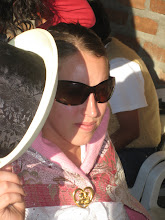
Within minutes of my arrival, the grandma was already fretting about where she could get me a costume to ensure my participation in the dance competition the following day. No was not an option so I went with the flow. In the end, some kind of elderly aunt decided to let me borrow her costume. Thus, I went dancing through the streets of Sicaya with around thirty members of the extended family—followed by our own personal orchestra— in a large pink skirt and my very own funky hat. Mind you, no one bothered to teach me how to dance the Santiago until we were leaving the house and headed for the competition. En route I guess I kind of picked it up because someone commented afterwards that it looked like I knew what I was doing. However, we did not win the contest.
Following the contest we literally danced our way over to the family’s designated portion of the plaza, where the band continued to play. Every family, of which there were around 60, had its own band as well as its own section of the square. I could barely hear our orchestra due to the neighboring band which was several members stronger. At least 30 to 40 crates of beer were brought in. All activity stopped until the beer was blessed and then the dancing continued. I had my picture taken with a handful of random relatives. Most of them were short old men, who were amused by the sight of such a tall white girl wearing traditional clothing. Some random Peruvian tourists also had their picture taken with me and my host-sister. Furthermore, I was subjected to a “photo” by a stranger that turned into a video, a fact I realized moments later as the camera started creeping slowly downwards.
Later on we danced our way to a rented locale, where more of the same ensued. The dancing consisted of a mix of huayno, hauylas, and Santiago. I called it an early night because my little host-brother was sick but all around town the dancing and drinking continued for quite some time.
The following day, we put on costumes of different colors and danced to the cemetery. There were people everywhere, with each family visiting the graves of its family members. More beer was brought in and for the first time in my life I got tipsy in a cemetery. A couple of mothers with semi-single sons started arguing over which of them would be my mother-in-law. In fact, a good portion of my time in Sicaya was spent discussing when I was going to find a Peruvian husband. My seven year old host-brother even commented that next year I would have to come again and that I should bring my “chico” along too.
After a few hours in the cemetery we danced back across town to the rented locale and continued with lunch and more dancing. Once again the festivities continued into the night.
I spent a couple more relaxing days in Huancayo before heading back to Chiclayo. Transport back to Lima ended up being a bigger headache than I expected. When we arrived at the terminal in the morning to buy tickets it became apparent that there were lots of people milling around, including lots of police. The bus companies decided to raise the ticket prices up from S/.10 to S/.100 which clearly caused discontent among the people. All of the windows in the terminal were smashed and no buses left that day. I eventually found a bus leaving that night which got me back to Lima just in time for a day bus back to Chiclayo. In all, I spent over 40 hours on buses during my two week vacation.
We, as in me and at least 20 other people, stayed in the house of my host-mom’s parents. That’s 20 people for about 7 beds. But I’m not complaining; I feel very privileged that I was able to stay with such a hospitable family. They treated me like a daughter.
Within minutes of my arrival, the grandma was already fretting about where she could get me a costume to ensure my participation in the dance competition the following day. No was not an option so I went with the flow. In the end, some kind of elderly aunt decided to let me borrow her costume. Thus, I went dancing through the streets of Sicaya with around thirty members of the extended family—followed by our own personal orchestra— in a large pink skirt and my very own funky hat. Mind you, no one bothered to teach me how to dance the Santiago until we were leaving the house and headed for the competition. En route I guess I kind of picked it up because someone commented afterwards that it looked like I knew what I was doing. However, we did not win the contest.
Following the contest we literally danced our way over to the family’s designated portion of the plaza, where the band continued to play. Every family, of which there were around 60, had its own band as well as its own section of the square. I could barely hear our orchestra due to the neighboring band which was several members stronger. At least 30 to 40 crates of beer were brought in. All activity stopped until the beer was blessed and then the dancing continued. I had my picture taken with a handful of random relatives. Most of them were short old men, who were amused by the sight of such a tall white girl wearing traditional clothing. Some random Peruvian tourists also had their picture taken with me and my host-sister. Furthermore, I was subjected to a “photo” by a stranger that turned into a video, a fact I realized moments later as the camera started creeping slowly downwards.
Later on we danced our way to a rented locale, where more of the same ensued. The dancing consisted of a mix of huayno, hauylas, and Santiago. I called it an early night because my little host-brother was sick but all around town the dancing and drinking continued for quite some time.
The following day, we put on costumes of different colors and danced to the cemetery. There were people everywhere, with each family visiting the graves of its family members. More beer was brought in and for the first time in my life I got tipsy in a cemetery. A couple of mothers with semi-single sons started arguing over which of them would be my mother-in-law. In fact, a good portion of my time in Sicaya was spent discussing when I was going to find a Peruvian husband. My seven year old host-brother even commented that next year I would have to come again and that I should bring my “chico” along too.
After a few hours in the cemetery we danced back across town to the rented locale and continued with lunch and more dancing. Once again the festivities continued into the night.
I spent a couple more relaxing days in Huancayo before heading back to Chiclayo. Transport back to Lima ended up being a bigger headache than I expected. When we arrived at the terminal in the morning to buy tickets it became apparent that there were lots of people milling around, including lots of police. The bus companies decided to raise the ticket prices up from S/.10 to S/.100 which clearly caused discontent among the people. All of the windows in the terminal were smashed and no buses left that day. I eventually found a bus leaving that night which got me back to Lima just in time for a day bus back to Chiclayo. In all, I spent over 40 hours on buses during my two week vacation.
Subscribe to:
Posts (Atom)